
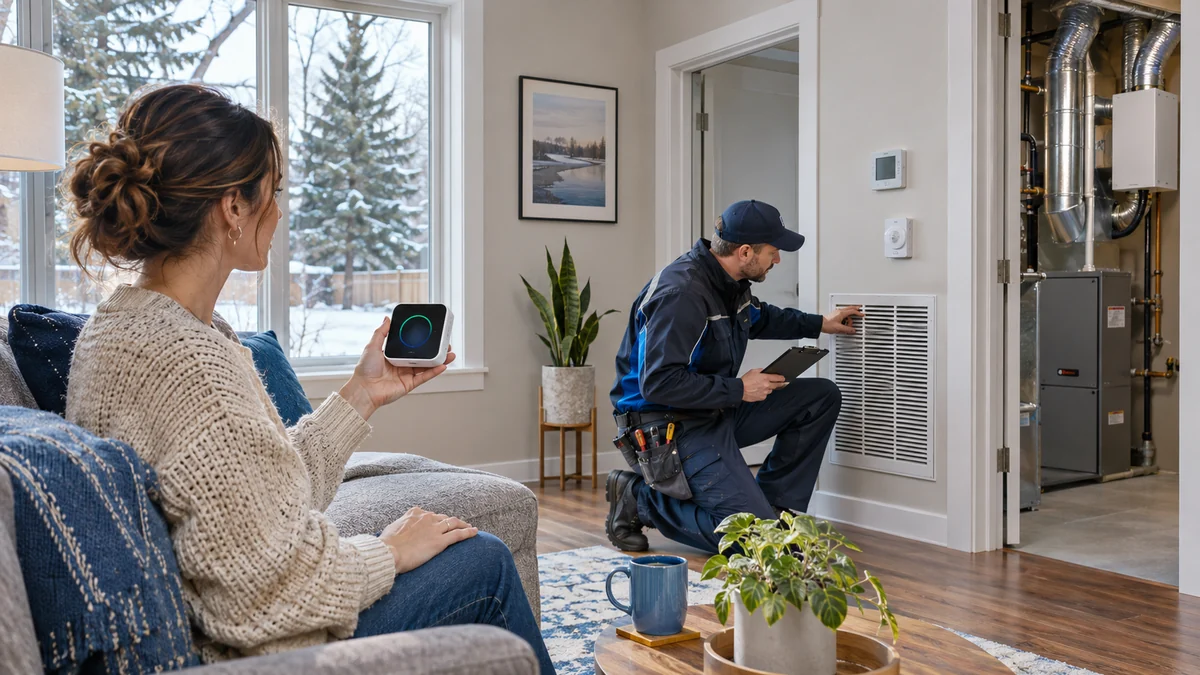
Stuffy rooms, lingering odours, window condensation and excess dust are useful clues, but none identifies one pollutant by itself. A practical indoor-air plan looks at the home, occupants, moisture sources, ventilation, filtration and combustion safety together.
In short
Use four steps in order: control the source, manage moisture, ventilate with clean outdoor air and filter particles with equipment the system can support. An air purifier cannot repair a leak, balance an HRV or make an unsafe combustion appliance safe.
What indoor air quality includes
Indoor air can contain particles, moisture, combustion products, gases from products and furnishings, and biological material associated with dampness. Conditions change with the season. Manitoba homes are often closed tightly during winter, while summer smoke or outdoor humidity can change when ventilation is helpful.
| Clue | Possible contributors | Useful first step |
|---|---|---|
| Condensation on windows | High indoor moisture, cold glass, limited airflow or insufficient ventilation | Measure humidity and inspect moisture sources, windows and ventilation |
| Lingering odours or stuffiness | Low ventilation, strong indoor sources or poor air distribution | Check exhaust fans and HRV/ERV operation |
| Dust returning quickly | Filter fit, duct leakage, indoor sources or cleaning activities | Inspect the filter rack, return path and source of the dust |
| Dry air and static | Cold outdoor air, air leakage or over-ventilation | Measure humidity before adding moisture |
| Visible dampness or mould | Leak, condensation, drainage or humidity problem | Correct the moisture source rather than relying on air cleaning |
1. Control pollutants at the source
Source control is usually more effective than trying to capture a contaminant after it spreads. Vent cooking outdoors, keep combustion equipment maintained, store fuels and solvents away from living space, repair water leaks and avoid indoor products that intentionally create ozone. During renovations, isolate dust and provide appropriate ventilation.
Safety checks air cleaners cannot replace
Some of the most important indoor-air hazards cannot be judged by smell, dust or a consumer monitor. Use certified smoke and carbon-monoxide alarms in the locations required for the home, test them as directed and leave immediately if a CO alarm sounds. Radon also requires a dedicated test; a furnace filter, portable purifier or general HVAC visit cannot tell you the radon level.
Fuel-burning furnaces, water heaters, fireplaces and stoves need correct venting and maintenance. Cooking can add particles, humidity and gases, so use an outdoor-vented range hood when available. An attached garage is another source pathway: do not idle vehicles or operate fuel-burning equipment inside it, and keep the door to the home closed and well sealed.
2. Keep moisture within the building's limits
Health Canada commonly recommends relative humidity between 30% and 50%, but a Manitoba home may require a lower winter setting to prevent condensation on cold windows and walls. Use a hygrometer and treat the building envelope as the limiting factor. Persistent wetting needs investigation because humidification, dehumidification and ventilation solve different problems.
Our guide to winter indoor humidity in Manitoba explains how outdoor temperature, window performance and household moisture affect the target.
3. Ventilate without ignoring outdoor conditions
Kitchen and bathroom exhaust remove pollutants near their source. Balanced systems such as HRVs and ERVs exchange stale indoor air for outdoor air while recovering energy. They still require correct airflow, controls and maintenance. When outdoor air is affected by wildfire smoke, the strategy changes: close openings, follow the Air Quality Health Index and emphasize filtration until conditions improve.
4. Match filtration to the particle and the system
Filters are most useful for particles. They do not reliably remove every gas or odour. A higher MERV rating can capture smaller particles, but the filter must fit tightly and the furnace or air handler must be able to move air through it. Portable HEPA units can supplement a central system in selected rooms when sized by clean air delivery rate.
Compare options in our guides to furnace-filter MERV ratings and whole-house versus portable air cleaning.
When an assessment is useful
An assessment is most useful when it begins with the complaint and the building rather than a generic test package. Record when and where the issue occurs, humidity, recent renovations, moisture history, equipment schedules and whether outdoor conditions change the symptoms. Patterson Mechanical provides indoor air quality services in Manitoba covering ventilation, filtration, humidity and whole-home equipment.
A room-by-room first pass
- Kitchen: confirm the range hood exhausts outdoors and note whether odours or particles linger after cooking.
- Bathrooms: run the exhaust during moisture-producing use and confirm it removes humidity rather than merely making noise.
- Bedrooms: look for morning condensation, blocked supply or return air, persistent stuffiness and furniture tight to cold exterior walls.
- Basement and mechanical room: check for water entry, uncovered drains, stored fuels, combustion-appliance concerns and filter or HRV maintenance needs.
- Attached garage: keep pollutants out of the house by sealing the connecting door and never running engines or generators inside.
Explore the indoor-air-quality silo
- HRV maintenance checklist
- What indoor air quality testing can and cannot tell you
- Allergies, dust, mould and HVAC options
- HRV freezing, leaking and operating problems
- Winnipeg winter window-condensation guide
- Winnipeg wildfire-smoke filtration guide
Need a whole-home indoor-air assessment?
Bring the rooms, timing and conditions you have noticed. We can review the home's ventilation, humidity, filtration and mechanical equipment and explain which next step fits the evidence.
Request ServiceFrequently Asked Questions
What are common signs of poor indoor air quality?
Persistent stuffiness, odours, excess dust, condensation and visible dampness are useful clues, but they do not identify one contaminant. Investigate the source, moisture, ventilation and filtration together.
Can an air purifier solve every indoor air problem?
No. Air cleaners mainly reduce selected airborne particles. They do not repair moisture sources, provide balanced ventilation or correct combustion and carbon-monoxide hazards.
What indoor humidity should a Manitoba home have?
Health Canada commonly recommends 30% to 50% relative humidity, but winter settings may need to be lower when cold windows or walls begin to condense.
Should an HRV run all winter?
Many systems are designed for continuous low-speed operation with higher ventilation when needed. Follow the installed system's design and manual, and have airflow or frost problems assessed.
Does indoor air quality testing diagnose health problems?
No. Building and air measurements can document selected conditions, but health concerns belong with a qualified health-care provider.