
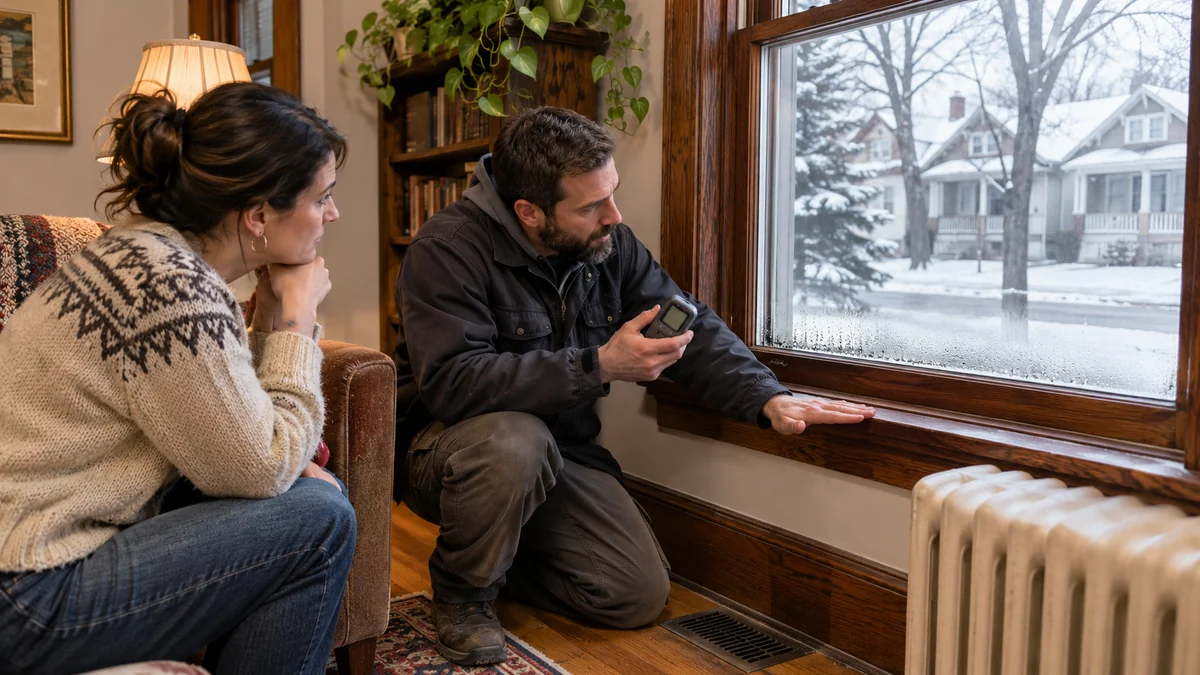
A small amount of short-lived condensation during a severe Winnipeg temperature drop is different from water running down the glass every day. Location matters too: moisture on the room side, outdoors or between sealed panes points to different causes.
Quick diagnosis
Interior condensation usually means the glass is cold relative to indoor humidity. Condensation between panes can indicate a failed sealed unit. Exterior condensation can occur on efficient glass under certain weather conditions and is not an indoor moisture problem.
Why Winnipeg cold changes the humidity limit
As outdoor temperature falls, interior glass and frames become colder. Natural Resources Canada shows that conventional double-glazed windows tolerate much less indoor humidity at -20°C or -30°C than around freezing. Older character homes, renovated homes with mixed window types and newer airtight homes can therefore show different condensation patterns.
| Outdoor temperature | Older double-glazed low-E | Double-glazed | Triple-glazed low-E |
|---|---|---|---|
| 0°C | 50% | 58% | 81% |
| -10°C | 34% | 44% | 74% |
| -20°C | 24% | 34% | 67% |
| -30°C | 15% | 25% | 60% |
| -40°C | 10% | 18% | 54% |
The Natural Resources Canada values assume 21°C indoors and represent estimated maximum humidity before condensation on the listed glazing. They are not universal setpoints: edge spacers, frames, wind, installation, blinds and room airflow can make one part of a window colder. If persistent water or frost appears, reduce the moisture load even when a hygrometer is below the table value.
| Pattern | Likely direction | What to check |
|---|---|---|
| Bottom edge of several windows | Indoor humidity and cold glass | Hygrometer, humidifier, HRV and coverings |
| One window only | Local airflow, seal or window condition | Register, curtains, weather seals and pane location |
| Between two panes | Insulating-glass seal failure | Window service rather than HVAC adjustment alone |
| Walls or closets also damp | Broader moisture, insulation or air-leakage concern | Building-envelope and ventilation assessment |
First steps that do not require equipment replacement
- Measure relative humidity near the problem and in the main living area.
- Use kitchen and bathroom exhaust during cooking and bathing.
- Open blinds or heavy curtains so warm room air reaches the glass.
- Keep supply registers and baseboards clear.
- Lower humidifier output during cold snaps if condensation persists.
- Confirm the HRV or ERV is operating and its filters and exterior hoods are clear.
When ventilation is part of the answer
A working HRV can reduce moisture by exchanging humid indoor air for dry winter outdoor air. More airflow is not always better: excessive ventilation can create dryness and energy loss, while an unbalanced system can affect house pressure. Adjust controls based on measured humidity and have airflow checked when settings do not produce the expected result.
When humidification is not the answer
Dry skin or static may tempt a homeowner to turn the humidifier higher, but wet windows show that at least some surfaces cannot support the added moisture. Improve air distribution, reduce excess moisture and assess the cold surface before raising the setting. Our guide to Manitoba winter humidity provides a complete decision process.
Why new and recently renovated homes can be wetter
New concrete, lumber, drywall compounds and other materials can release construction moisture as they dry. Air-sealing work and replacement windows can also reduce the uncontrolled leakage that previously removed moisture. Condensation after a renovation therefore does not automatically mean the new window failed; review indoor moisture production, exhaust and ventilation along with the window installation.
Protect the sill while diagnosing the cause
Wipe standing water from glass, frames and sills so it does not soak finishes or nearby materials. Move belongings away from wet surfaces and document staining, peeling finishes or mould. Repeated wetting, water inside a wall, or condensation accompanied by damp drywall deserves prompt investigation rather than continued humidifier adjustment.
Winnipeg homes need a system-level view
A character home with original masonry, radiators and replacement windows behaves differently from a newer airtight home with forced air and an HRV. Patterson Mechanical provides home humidity solutions and broader plumbing and HVAC service for Winnipeg homes. The goal is to identify whether the limiting factor is moisture production, control settings, airflow, ventilation or the window and wall assembly.
Photograph the condensation pattern and record indoor humidity, outdoor temperature and the time of day for several cold days. Note whether cooking, showers, closed blinds or an occupied bedroom make it worse. Those observations give a technician more useful evidence than one reading taken after the window has already dried.
Are Winnipeg windows staying wet or frosted?
Record the humidity, outdoor temperature and affected rooms. We can assess humidifier controls, exhaust, ventilation and airflow while identifying when the window or envelope needs a separate specialist.
Request ServiceFrequently Asked Questions
Is window condensation normal in a Winnipeg winter?
A small temporary amount during a rapid cold snap can occur. Persistent water, frost or wet frames should be addressed to reduce damage and mould risk.
What humidity should I use at -30°C?
The safe setting depends on window performance. Older double glazing may require a much lower setting than high-performance triple glazing. Reduce humidity if condensation persists.
Will replacing windows stop condensation?
Better windows raise the interior surface temperature and can help, but excess indoor moisture and poor airflow can still cause condensation.
Should I turn off the humidifier?
Lower it when windows are wet, then confirm the humidity, ventilation and moisture sources. Complete shutdown may make the home uncomfortably dry if another problem is responsible.
Can an HRV fix condensation?
It can reduce excess indoor moisture when correctly operated and balanced. It cannot repair a failed window seal, hidden leak or insulation defect.