
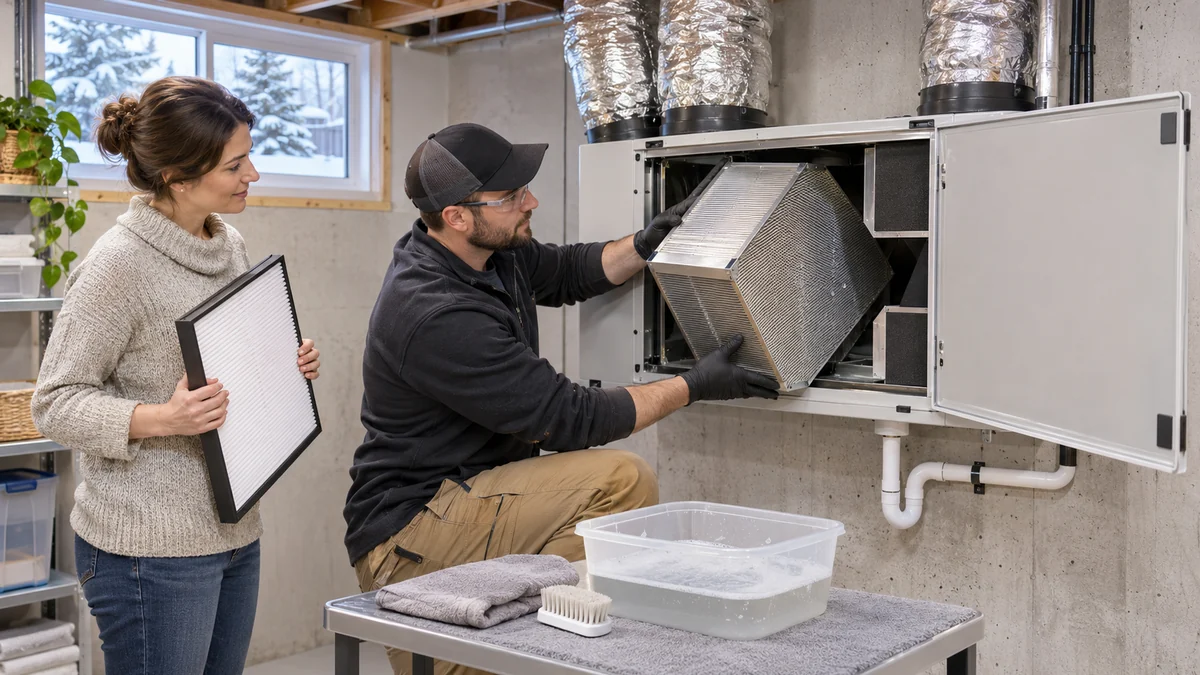
An HRV can run for years while gradually losing airflow because filters load, exterior hoods collect debris or the core and fans become dirty. Routine maintenance protects ventilation; it does not replace professional balancing and electrical or motor service.
Maintenance baseline
Inspect filters every one to three months, keep exterior intake and exhaust hoods clear, check the condensate path, clean the core as its manual allows and arrange periodic professional service. Always disconnect power before opening the cabinet.
Monthly to every three months
- Disconnect power and inspect both intake and exhaust filters.
- Vacuum or wash reusable filters only as the manufacturer allows.
- Replace disposable filters with the specified type and orientation.
- Check the exterior intake and exhaust for snow, lint, insects or vegetation.
- Look for standing water, loose drain tubing or new cabinet noise.
Natural Resources Canada recommends cleaning many HRV filters every one to three months. Homes with renovation dust, pets, smoke or heavy occupancy may need more frequent checks.
Seasonal core and drain inspection
Follow the manual before removing a heat-recovery core. Some cores may be washed with mild soap and water; others require different care, and many ERV cores must not be washed. Allow approved washable components to dry fully before reassembly.
Inspect the condensate pan, tubing, trap and drain termination. A blocked or frozen path can cause leakage. During cold weather, confirm the unit completes its defrost cycle and that exterior hoods remain separated and unobstructed.
| Component | Homeowner check | Professional task |
|---|---|---|
| Filters | Inspect, clean or replace to manual | Confirm correct filter and pressure impact |
| Exterior hoods | Clear snow and visible debris safely | Correct damaged hood, screen or separation |
| Core | Clean only using approved method | Inspect seals, bypass and frost control |
| Condensate | Look for water and obvious blockage | Clear, repair and test drainage |
| Airflow | Note stale rooms, noise or weak grilles | Measure and balance supply and exhaust |
Do not forget grilles and controls
Vacuum accessible grilles without pushing debris into the duct. Keep furniture and storage away from supply and exhaust points. Review the main control, bathroom boost switches and dehumidistat. A control set too low or high can create excess runtime, dryness or condensation without any mechanical failure.
Annual fan and ductwork checks
CMHC includes cleaning grilles, inspecting accessible ductwork and servicing fans in its seven-step HRV maintenance guidance. Once a year, remove and inspect accessible grilles, vacuum the nearby duct opening and look for disconnected, crushed or wet ductwork. A more extensive duct cleaning or a concern inside concealed ductwork belongs with a qualified service provider.
Fan blades collect dust and can lose performance or become unbalanced. Disconnect power and follow the owner's manual before approaching the fan section. Some manuals permit gentle brushing of accessible blades; other cabinets make the fans a service-only component. Most newer HRVs do not require motor lubrication, while some older models have a designated oil point. Never oil a motor unless the manual specifically directs it.
When to book service
- The unit leaks, trips a breaker or will not run.
- Frost persists instead of clearing during normal defrost.
- One side of the house remains stale or rooms become unusually dry.
- Fans grind, vibrate or change speed unexpectedly.
- Ducts, dampers or controls were altered during a renovation.
- The system has never been measured and balanced.
Keep a simple maintenance record
Write the filter date, core-cleaning date, control setting and any winter frost or leakage observations on a card near the unit. The pattern helps distinguish a recurring seasonal condition from a new failure. After a renovation, window replacement or major air-sealing project, ask whether the ventilation rate and balance should be rechecked because the way the house handles air may have changed.
Patterson Mechanical provides HRV installation and service in Manitoba. If the problem is active, use our guide to HRV freezing, leaking and continuous-operation symptoms. For equipment selection, compare HRVs and ERVs in Manitoba.
Is your HRV due for an airflow check?
If routine filter and core care does not restore performance, we can inspect controls, drainage, frost protection and measured supply and exhaust airflow.
Request ServiceFrequently Asked Questions
How often should HRV filters be cleaned?
Natural Resources Canada recommends cleaning many HRV filters every one to three months. Follow the installed unit's manual and inspect more often during dusty work or smoke events.
Can I wash an HRV core?
Only when the manufacturer permits it. Some HRV cores are washable, while ERV and specialty cores may require a different method.
Should an HRV run continuously?
Many systems are designed for continuous low-speed ventilation with higher-speed boost. Confirm the design and control settings for the home.
Why is there water under my HRV?
A blocked drain, loose tubing, failed trap, cabinet seal, excess frost or another condensate problem may be involved. Shut the unit off if water threatens electrical parts.
Does filter cleaning rebalance an HRV?
No. Clean filters restore part of the airflow, but balancing requires instruments to measure supply and exhaust rates.