
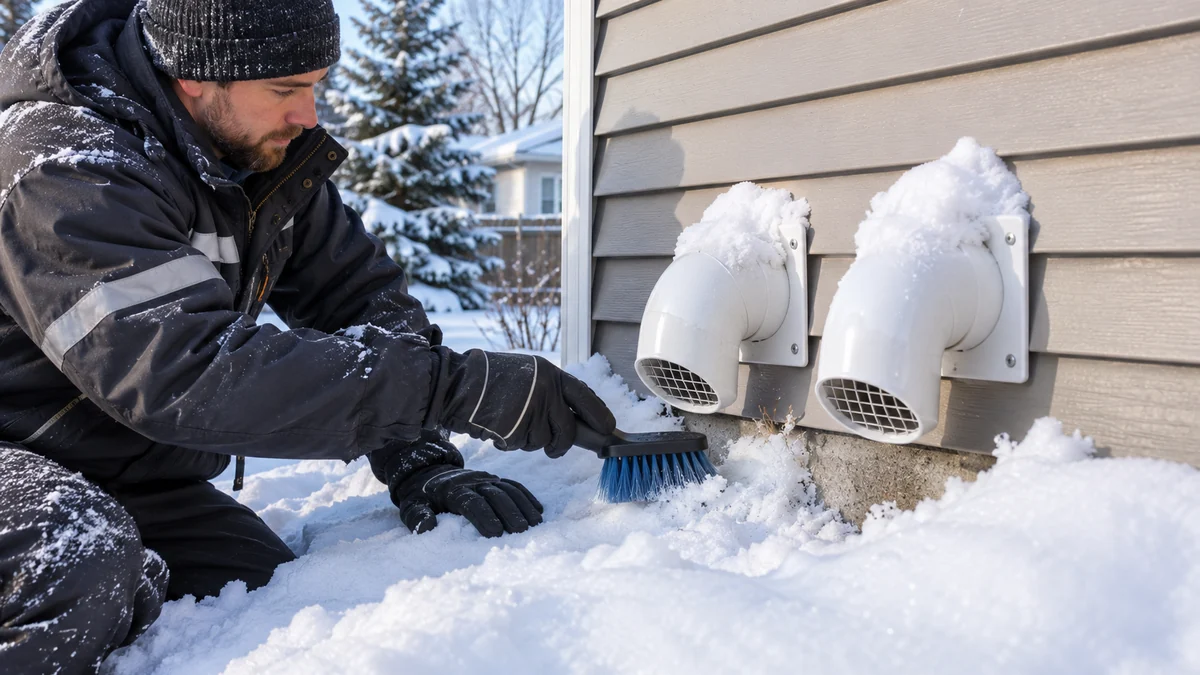
High-efficiency furnaces commonly use sidewall pipes for combustion air and exhaust. Snowdrifts, wind-packed snow, frost, roof runoff or ice can obstruct an opening and prevent the furnace from completing its safe startup sequence. The correct response is to expose the opening without damaging it, then investigate recurring blockage.
Safe response
- Check for a gas odour or CO alarm; leave and call emergency help if either safety condition exists.
- Turn the thermostat down or furnace off if it repeatedly attempts to start.
- From a safe ground position, gently brush away loose snow around the openings.
- Do not insert tools, pour hot water, chip ice from the pipe or alter its termination.
- If hard ice remains or the furnace will not restart normally, arrange qualified service.
Know which exterior components you are looking at
Furnace intake and exhaust terminations are often white plastic pipes, but homes may also have water-heater vents, HRV hoods, dryer outlets and plumbing vents. Follow the furnace piping visually only when that can be done safely, or use installation records. Do not assume that two nearby pipes serve the same appliance.
The natural-gas meter and regulator are separate equipment. Manitoba Hydro says to keep them clear using a hand or broom and never strike, kick or chip ice with a hard object. Do not pile shovelled or blown snow against the meter or vents.
Symptoms of restricted furnace venting
| What happens | Possible meaning | Response |
|---|---|---|
| Inducer starts but ignition does not follow | Pressure proving cannot confirm safe airflow | Record the code and inspect exterior openings |
| Furnace locks out after snowfall | Snow or ice may be restricting a termination | Clear loose buildup and call if the fault remains |
| Recurring frost forms at the same pipe | Exhaust moisture, recirculation, drainage or termination concern | Have vent design and furnace operation assessed |
| CO alarm sounds | Possible combustion or venting emergency | Evacuate and call 911 or emergency services |
| Gas odour near meter or home | Possible gas leak or regulator problem | Leave and call Manitoba Hydro from a safe place |
How to clear loose snow without causing damage
Approach only when footing is safe. Use a gloved hand or soft brush to remove loose snow from the area around the pipe and restore open air space. Follow the appliance manual for required clearances and termination arrangement. Avoid force, heat, sharp tools and anything pushed into the pipe.
Do not cut, rotate, extend or add a screen to the termination. Those changes can alter airflow, trap condensate or conflict with the listed installation. If ice is bonded to the opening or inside the pipe, stop and call.
Why recurring ice needs more than repeated clearing
Repeated icing can involve exhaust recirculation, termination spacing, pipe slope, condensate drainage, furnace setup, prevailing wind or roof drainage. A technician should compare the installation with the equipment instructions, inspect the entire vent path and confirm pressure and combustion operation.
If water is also appearing near the furnace, see our high-efficiency furnace condensate guide. If the unit repeatedly starts and stops, use the short-cycling guide to record the sequence.
Prevention through the Manitoba winter
- Inspect exterior vents after drifting snow, freezing rain and roof runoff.
- Keep snowblower discharge and shovelled piles away from vents and the gas meter.
- Correct eavestrough or downspout leaks that create ice above equipment.
- Keep a clear, safe walking route to the vent area.
- Include venting and condensate checks in qualified furnace maintenance.
Patterson Mechanical provides high-efficiency furnace and venting diagnosis across Manitoba. Winnipeg also advises residents to keep outdoor air vents free of snow and ice; see our Winnipeg heating service coverage when local help is required.
Is snow or ice stopping the furnace?
Clear only loose exterior snow and save the fault code. We can inspect recurring icing, the vent path, condensate drainage and furnace operation.
Request Furnace ServiceFrequently Asked Questions
Can I pour hot water on a frozen furnace vent?
No. Water can refreeze inside or around the termination and may damage materials. Remove only loose snow safely and call for bonded ice or an internal obstruction.
Will a blocked furnace vent create a fault code?
Many furnaces use pressure-proving controls that stop ignition or create a lockout when airflow is not confirmed. Preserve the code for diagnosis.
Can I add a screen to keep snow out of the vent?
Do not modify the termination unless the furnace manufacturer and applicable installation requirements specifically permit the component. An added screen can frost or restrict flow.
Why does the furnace vent keep icing up?
Possible factors include exhaust recirculation, termination arrangement, pipe slope, condensate drainage, furnace operation, wind and roof runoff. Repeated icing deserves a full assessment.
What should I do if the CO alarm sounds near the furnace?
Evacuate people and pets immediately, call 911 or local emergency services from a safe place, and do not re-enter until authorities say it is safe.