
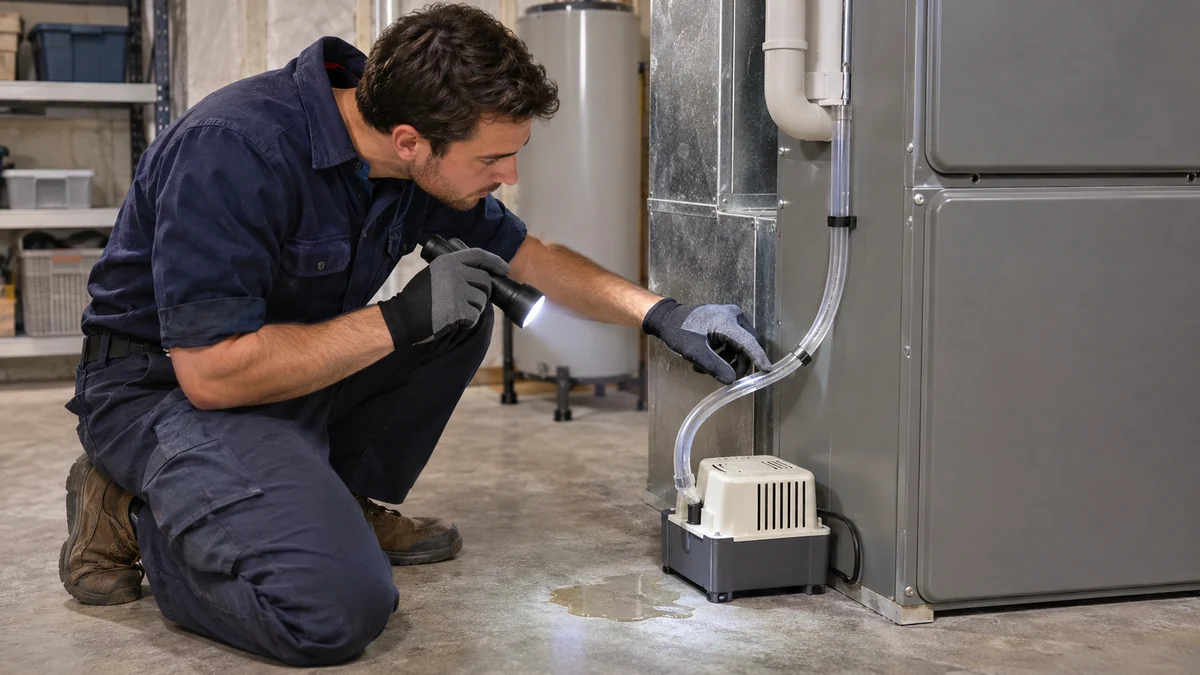
High-efficiency furnaces extract enough heat from exhaust that water condenses inside the appliance and venting system. That condensate should drain through manufacturer-designed traps, tubing and sometimes a pump. Water on the floor means the drainage path, pump, humidifier, venting or another nearby system needs to be identified before operation continues.
Immediate response
- Keep people away from wet electrical equipment and standing water.
- Turn the furnace off only if the switch can be reached without contacting water.
- Place a container or absorbent material to limit property damage without blocking a drain or vent.
- Photograph where the water first appears and note whether the furnace, humidifier or pump was running.
- Do not plug, pinch, reroute or blow into condensate tubing.
First identify whether the furnace is actually the source
| Where water appears | Possible source | Useful clue |
|---|---|---|
| At clear tubing or floor drain | Condensate restriction, disconnection or frozen drain | Leak occurs during a heating cycle |
| At a small pump reservoir | Failed pump, stuck float, blocked discharge or lost power | Pump is full, noisy or silent when it should discharge |
| At the furnace-mounted humidifier | Pad, drain, solenoid or feed-water issue | Leak changes when humidifier is turned off |
| At vent connections or cabinet | Vent slope, seal, trap or internal drainage problem | Water follows vent piping or appears after long cycles |
| Near a water heater or overhead pipe | Separate plumbing or appliance leak | Water continues when the furnace is off |
How a condensing furnace drainage system works
Combustion condensate collects in internal passages and moves through a trap to an approved drain or condensate pump. The trap also supports the pressure relationships needed for safe furnace operation. A blocked or improperly arranged drain can stop heating through a safety control; it should not be bypassed to keep the furnace running.
The condensate can be acidic enough that materials and disposal arrangements matter. Do not improvise tubing, neutralizers or connections. A technician should follow the furnace instructions and local requirements.
Why winter freezing happens
Condensate tubing can freeze where it passes through an unheated area, terminates outdoors or is exposed to cold airflow. A poorly sloped line can hold water that later freezes. Exhaust recirculation or venting concerns can also create frost and drainage problems near the termination.
Do not use an open flame, heat gun or boiling water to thaw the line. These methods can damage plastic, create electrical hazards or move water into the furnace. If the problem follows blowing snow or exterior icing, also review the snow-blocked furnace vent guide.
Condensate pump clues
A pump should collect water and discharge it when the float rises. A full reservoir can mean lost power, a stuck float, failed motor, blocked check valve or restricted discharge. Some pumps are wired to interrupt the furnace or air conditioner when water rises too high. Bypassing that safety can trade a heating outage for water damage.
Record whether the pump hums, runs without moving water, overflows or remains silent. Do not put hands into a powered reservoir or test exposed wiring.
What professional diagnosis should include
- Confirm the actual water source and when it leaks.
- Inspect internal and external condensate paths, trap and connections.
- Test pump operation, check valve and discharge route where used.
- Review vent slope, supports, termination and signs of recirculation.
- Check the humidifier and nearby plumbing independently.
- Confirm the furnace starts, drains and completes a full heating cycle after repair.
Patterson Mechanical provides high-efficiency furnace leak and condensate diagnosis in Manitoba. Bring the model number, photographs and timing. If water has contacted finished materials or electrical systems, restoration or electrical assessment may also be needed.
Water collecting around the furnace?
Keep clear of wet electrical equipment and photograph the source. We can trace the condensate, pump, humidifier, venting and nearby plumbing before restoring operation.
Request Furnace ServiceFrequently Asked Questions
Is it normal for a high-efficiency furnace to make water?
Yes. Condensing furnaces normally create condensate, but it should drain through the designed trap, tubing and pump or approved drain without leaking.
Can a clogged furnace drain stop the heat?
Yes. Many furnaces use pressure or overflow-related safety controls that can interrupt heating when condensate does not drain correctly.
Can I run the furnace if water is leaking?
Shut it down if water is reaching electrical components, the cabinet or finished materials, or if safe drainage is not confirmed. Arrange prompt diagnosis.
Why does the furnace condensate line freeze?
Exposure to unheated spaces, poor slope, an outdoor termination, cold airflow or a venting/drainage defect can leave water where it freezes.
Could the humidifier be causing the furnace leak?
Yes. A furnace-mounted humidifier has a water feed, pad and drain. Its leak can appear to come from the furnace, so each source should be isolated and tested.