
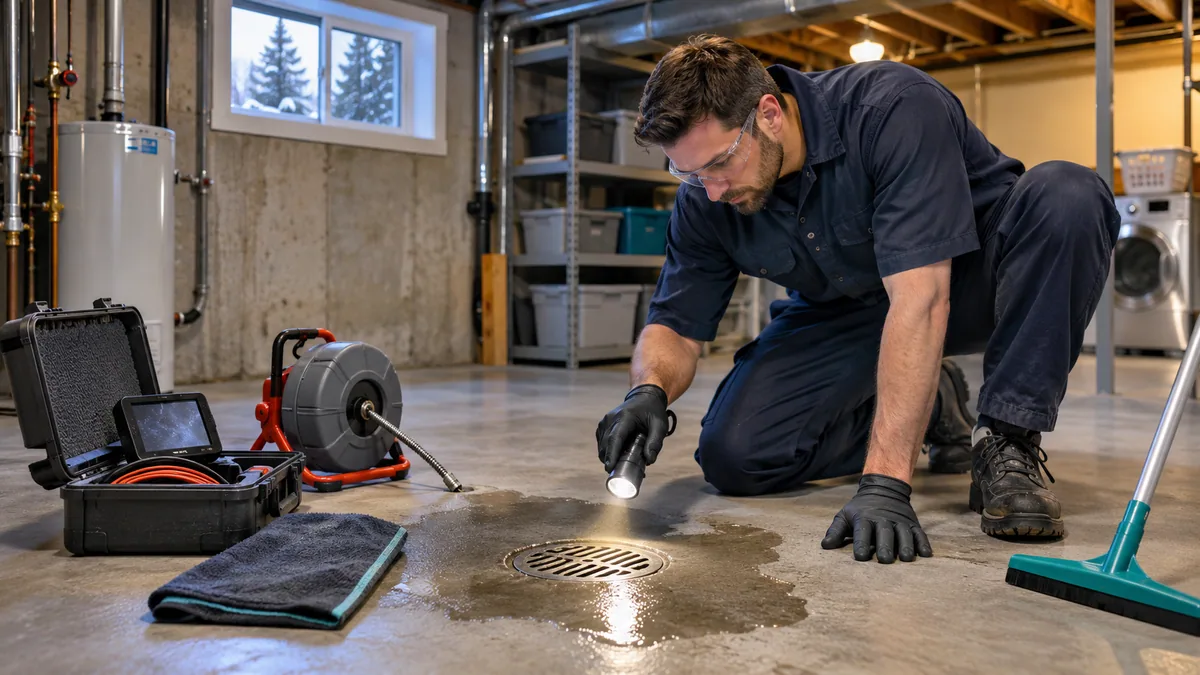
If wastewater is rising through a basement floor drain, shower or toilet, stop using plumbing fixtures immediately. Keep people and pets away from the affected area, avoid contact with contaminated water, and do not run a washer, dishwasher, sink or toilet while the sewer is restricted.
Immediate response
- Stop all water use in the building.
- Keep children, pets and vulnerable people out of the area.
- Avoid electrical hazards; do not enter water near energized equipment.
- Call a sewer-cleaning contractor and notify your insurer if damage occurred.
- Report basement flooding or a suspected City-main problem to Winnipeg 311.
First, make the area safe
Sewage can contain microorganisms and contaminants. Do not treat it like ordinary rainwater. Manitoba advises keeping children, pets and people with underlying health concerns away until cleanup is complete. If water is near electrical panels, outlets, appliances or extension cords, stay out and contact the appropriate emergency or electrical help.
Move clean, dry belongings only when that can be done without walking through contaminated water. Take photos from a safe location and record when the backup began, which fixtures were used and whether neighbouring properties are affected. Call your insurer early; coverage and documentation requirements vary by policy.
Who to call in Winnipeg
The City says the first step for a blocked private sewer is to arrange and pay for a sewer-cleaning contractor. Patterson Mechanical provides drain and sewer cleaning in Winnipeg and surrounding Manitoba communities. A contractor may restore flow and identify whether the problem appears to be in the private service.
Call 311 when basement flooding should be reported, when several nearby properties are affected, or when a contractor has evidence that the blockage is past the property line under City property. The City may then check its sewer main. A backup does not by itself prove that the City main failed.
What the symptom pattern can tell you
| What you notice | Possible direction | Next step |
|---|---|---|
| One sink or tub drains slowly | Local fixture or branch restriction | Stop using that fixture and arrange assessment |
| Several low fixtures gurgle or back up | Building drain or private sewer restriction | Stop all water use and call for sewer service |
| Backup during heavy rain | Private restriction, overloaded sewer or missing/failed protection | Restore service, report flooding and assess backflow protection |
| Neighbours have the same problem | Possible wider sewer issue | Call 311 as well as protecting the property |
Our guide to a clogged drain versus a main sewer blockage explains the fixture patterns in more detail.
Confirm whether it is sewage, groundwater or a plumbing leak
Not every wet basement is a sewer backup. Wastewater that rises through a floor drain or toilet and reacts when fixtures run points toward the drainage system. Clear water entering at a wall, window or floor crack during rain is more consistent with overland or groundwater entry. Clear water near a water heater, boiler, humidifier or condensate line can be an equipment or supply-plumbing leak.
Do not use colour or smell as the only safety test: diluted sewage may look grey or nearly clear. Note the entry point and timing, avoid contact, and let the service and restoration teams classify the source before cleanup begins.
After flow is restored, diagnose the cause
Ask what was removed, where resistance was encountered and whether a post-cleaning camera inspection is now possible. Roots, grease, foreign material, an offset joint, a collapsed section and a poorly graded pipe do not have the same long-term answer. A successful cleaning confirms that flow returned; it does not automatically confirm that the pipe is structurally sound.
Request useful records: the access point, approximate cable or camera distance, video or stills when available, and a clear description of any unresolved defect. If the line has backed up before, review the recurring sewer-clog diagnosis guide before scheduling the same temporary response again.
Cleanup and prevention
Remove porous materials that cannot be safely cleaned and dried, wash and disinfect affected hard surfaces using appropriate public-health guidance, and dry the area promptly. Restoration scope depends on the contamination and materials involved; a qualified restoration firm may be appropriate for larger events.
Once the cause is known, prevention may include root management, pipe repair, grease-control changes, maintaining an existing backwater valve, or evaluating a properly designed valve and sump system. The City notes that no Winnipeg home is entirely free from basement-flooding risk. Review our Winnipeg plumbing and HVAC service page for local coverage.
Need help restoring sewer service?
Stop water use and tell us which fixtures are affected, when the backup began and whether this has happened before. We can plan the cleaning and diagnostic next step.
Request Drain or Sewer ServiceFrequently Asked Questions
Can I flush a toilet after a sewer backup starts?
No. Stop all water use because each discharge can add wastewater behind the restriction and worsen the backup.
Should I call 311 or a plumber first?
For a suspected private blockage, the City directs owners to arrange a sewer-cleaning contractor first. Call 311 to report basement flooding, a possible City-main issue, or findings that place the blockage under City property.
Does a cleared sewer mean the pipe is fixed?
Not necessarily. Cleaning can restore flow without correcting roots, separated joints, collapse, poor grade or another structural cause.
Will home insurance cover a sewer backup?
Coverage depends on the policy and endorsements. Contact your insurer promptly and preserve photos, invoices, videos and cleanup records.
When is a sewer backup an emergency?
Treat active sewage entry, electrical exposure, rapid water rise, unsafe air or loss of sanitary facilities as urgent. Keep people out and contact appropriate emergency, utility and restoration help.