If a sewer blocks again weeks or months after it was snaked, the first cleaning may have restored flow without removing the full obstruction or correcting the condition that caused it. The next step is not automatically a larger machine; it is a better diagnosis.
Most common directions
Recurring clogs can result from roots, grease and scale, a partial opening, an offset or broken joint, pipe deformation, standing water from poor grade, foreign material, or a cleaning method that did not match the obstruction. A post-cleaning camera and service history help distinguish them.
What “snaked” can mean
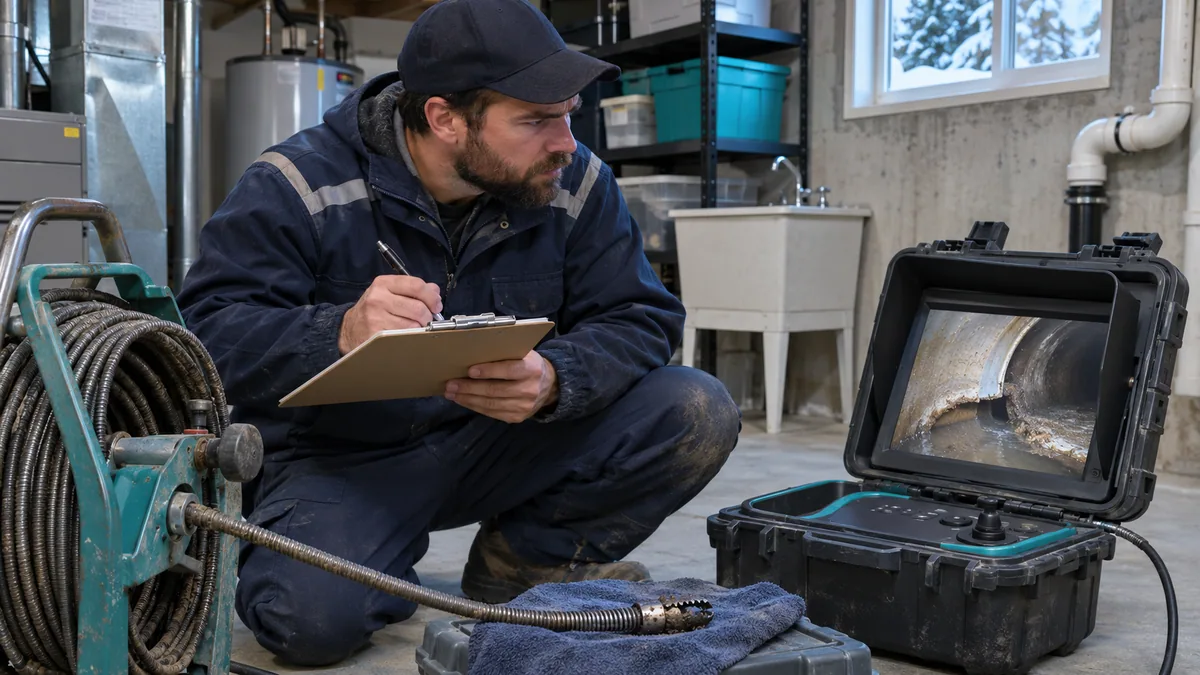
Drain cables and cutter heads come in different sizes and shapes. A small cable can punch a temporary opening through soft material while leaving buildup around the pipe. A root cutter can remove a root mass but cannot seal the joint where roots entered. The word alone does not describe the access point, head, distance or result.
Ask for the original invoice and any video. Record which fixtures were affected, the time until recurrence and what material was retrieved. Patterson Mechanical provides drain cleaning and sewer camera diagnosis in Manitoba for recurring main-line problems.
Match the recurrence pattern to the evidence
| Pattern | Possible explanation | Evidence to seek |
|---|---|---|
| Returns within days | Incomplete opening, wrong branch, unresolved hard obstruction | Access point, cable distance, post-cleaning flow and video |
| Returns seasonally | Roots, freeze exposure, groundwater or use pattern | Dated service history and camera location |
| Returns after high-use events | Reduced diameter, poor grade or capacity issue | Full-bore cleaning and standing-water footage |
| Same distance every time | Fixed joint, deformation or local defect | Camera-head locating and repeatable measurement |
Why a camera should follow cleaning
A camera cannot see through opaque water or a complete obstruction. Once flow and visibility are restored, footage can show whether the pipe is open, whether roots remain and whether a structural defect is visible. Keep the full recording when possible, not only one still image.
The camera should start from a documented access point and use a distance counter. If repair may be considered, a locator can relate the camera head to the surface. Our camera, snaking and hydro-jetting comparison explains the different roles.
Cleaning options depend on the obstruction
Mechanical cleaning can cut roots and retrieve or break up obstructions. Water jetting can scour certain grease and soft deposits when the pipe condition, access and containment are suitable. Neither method should be selected only because it sounds more powerful. A fragile, collapsed or badly separated line may require a different plan.
Do not combine chemical cleaners or add them before a service visit; this can expose occupants and technicians to hazardous mixtures. Tell the contractor about any product already used.
When to move from maintenance to repair planning
Repair deserves evaluation when the interval between clogs shrinks, cleaning cannot pass a location, footage shows a defect that traps material, or the consequences of another backup are unacceptable. Compare a targeted repair with longer replacement using location, pipe condition, access, restoration and expected life—not frustration alone.
The Manitoba sewer repair-versus-replacement guide organizes that decision. If roots are the recurring cause, see the root intrusion guide.
What a defensible completion check looks like
After cleaning, the contractor should confirm that fixtures drain under a controlled flow test, then inspect the accessible line when conditions allow. The record should distinguish “flow restored” from “pipe condition acceptable.” Those are separate conclusions. If the camera cannot pass, water remains opaque or a section was not inspected, the report should say so plainly.
A useful recommendation names the next trigger: another cleaning by a stated date, a located spot repair, further access, or no immediate work beyond monitoring. Avoid open-ended advice that only says to call again when it blocks.
Build a record that improves the next visit
- Dates, weather and affected fixtures
- Access point and approximate obstruction distance
- Cleaning equipment and head used
- Material removed
- Before-and-after camera footage
- Surface location of any fixed defect
- Recommended next action and urgency
This turns a series of emergency invoices into a condition history that can support preventive cleaning or a defensible repair scope.
Tired of repeating the same emergency call?
Bring the prior dates, invoices and video. We can reopen the line, document what remains and build a cause-based maintenance or repair plan.
Request Drain or Sewer ServiceFrequently Asked Questions
How soon is too soon for a sewer to clog again?
Any recurrence deserves review, but a return within days or weeks strongly suggests that the opening was incomplete, the wrong section was treated or a fixed defect remains.
Is hydro jetting always better than snaking?
No. Each method suits different materials and pipe conditions. Inspection, access, containment and structural condition should guide selection.
Can a camera find a clog before cleaning?
It may identify the obstruction, but cameras often cannot see beyond opaque water or pass a complete blockage. Post-cleaning inspection usually provides better condition evidence.
Do recurring roots mean replacement is required?
Not automatically. Compare pipe condition, recurrence interval, cleaning risk, location and the consequences of another backup before choosing maintenance or repair.
What should a useful drain-cleaning invoice include?
It should identify the access point, work performed, approximate distance, material found, whether flow was restored, inspection findings and unresolved recommendations.