First: Is Constant Running Actually a Problem?
On days when the outdoor temperature reaches 32–35°C — which Manitoba sees regularly in July and August — it's normal for a central AC to run for extended periods. The system may run for an hour or more at a stretch while trying to maintain a set temperature of 22–23°C against a 35°C outdoor load. This is the system doing its job.
The problem is when the AC runs non-stop and still can't reach the thermostat setpoint, or when it runs constantly on a day that isn't particularly hot. That's when something else is going on.
Note that this is a different issue from an AC that runs but doesn't cool at all — if your home isn't cooling down despite the system running, see our post on why your AC isn't cooling the house for that diagnostic path.
Six Causes of an AC That Runs Without Stopping
1. The System Is Undersized for Your Home
An AC that's too small for the home's cooling load will run continuously on hot days without ever satisfying the thermostat. This is particularly common in homes that have had renovations adding conditioned square footage, or where the original contractor sized the system by a rough estimate rather than a load calculation.
If your system always ran fine and the constant running is new, undersizing probably isn't the cause — something else has changed. If it's been a problem since the system was installed, sizing is worth investigating. Our post on how to choose the right size AC for your Manitoba home explains the proper sizing process.
2. A Dirty or Clogged Air Filter
This is the first thing to check — and the easiest to fix. A heavily clogged filter restricts airflow through the evaporator coil, dramatically reducing the system's ability to transfer heat out of the air. The system runs constantly because it's moving far less air than it was designed to cool.
Check it now: If your filter is visibly grey and clogged, replace it before doing anything else. Filters in active-use systems should be changed every 1–3 months in summer depending on filter type and household dust levels.
3. Low Refrigerant
Refrigerant is the medium that carries heat from inside the home to the outdoor unit. If the system has a refrigerant leak and charge has dropped below the specified level, the evaporator coil can't absorb heat effectively — the system keeps running but can't cool properly. Signs of low refrigerant include: ice forming on the refrigerant line or evaporator coil, warmer than expected air from supply registers, and continuous operation without reaching the setpoint.
Refrigerant handling requires a licensed refrigeration technician. This is not a DIY check.
4. Dirty Condenser Coils (Outdoor Unit)
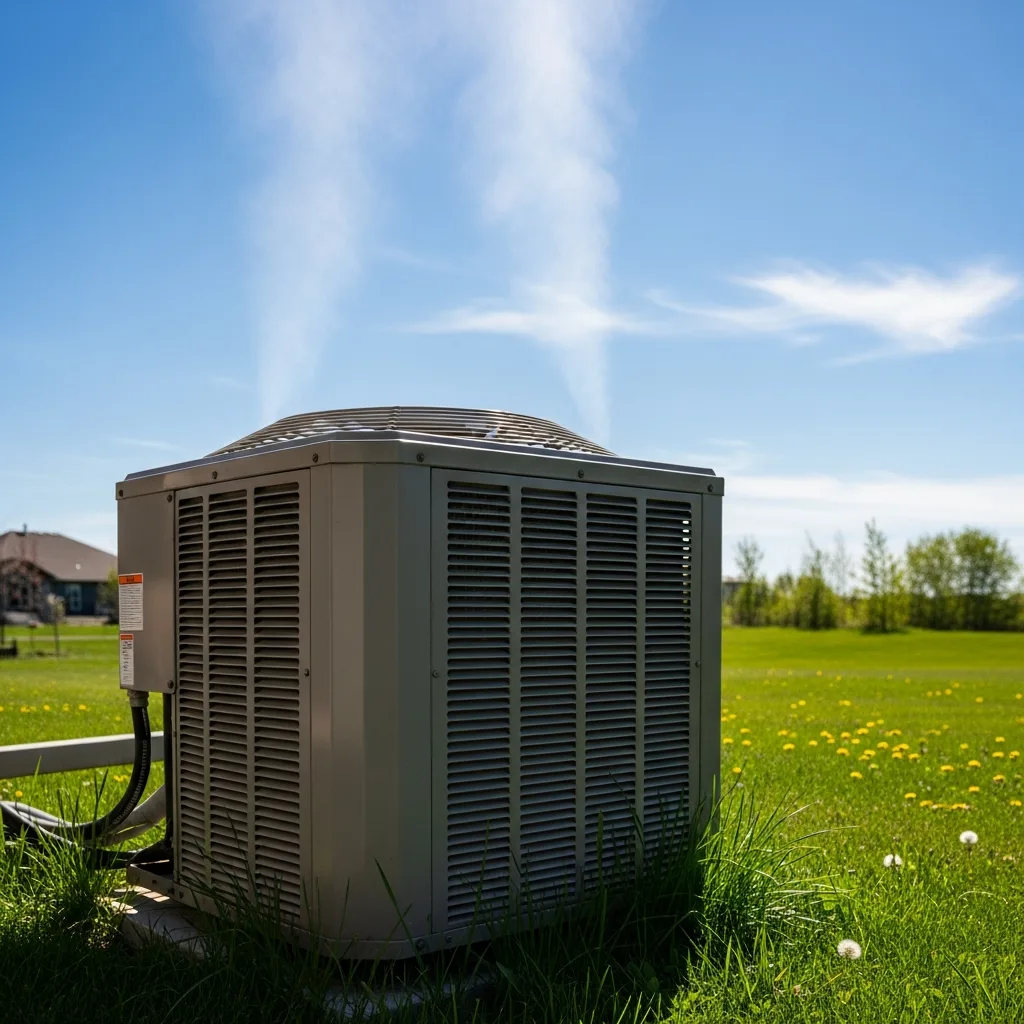
The outdoor condenser unit rejects the heat pulled from your home into the outside air. If the condenser coils are clogged with dirt, cottonwood fluff, or debris, they can't shed heat efficiently — the system has to work harder and longer to accomplish the same cooling. Manitoba's cottonwood season in June is a common culprit for sudden efficiency drops.
DIY check: Look at the outdoor unit's fins. If they're visibly clogged with fluff or debris, a careful rinse with a garden hose (from the inside out if you know how, or just from the outside) can help. Don't use a pressure washer — the fins are easily bent.
5. An Aging, Inefficient System
As AC systems age, efficiency drops. An older system may have its rated capacity on paper but perform significantly below that in practice due to compressor wear, coil degradation, and refrigerant charge drift. If your system is 12–15 years old and running more than it used to on similar-temperature days, age-related efficiency loss is a likely contributor.
Our post on how long central AC lasts in Manitoba covers typical system lifespans and how to decide between repair and replacement. If you're at the point of replacement, see our post on AC repair vs. replacement, and note that a new high-efficiency system may qualify for HVAC rebates in Manitoba.
6. Duct Leaks or Poor Home Insulation
If conditioned air is leaking out of duct connections before reaching the living space, the system runs longer to compensate. Similarly, a poorly insulated home lets heat in faster than a well-insulated one — meaning the cooling load is higher than it should be for the home's size. Both issues make the AC run longer than it needs to.
What to Check Yourself Before Calling for Service
- Replace the air filter if it hasn't been done recently
- Check the outdoor unit for debris or cottonwood clogging and rinse if needed
- Check that all supply and return registers in the home are open and unobstructed
- Check the thermostat setpoint — confirm it's set to a realistic temperature, not lower than 21°C
- Check whether ice is forming on the refrigerant line (the insulated copper line running into the outdoor unit) — if so, call a technician
If none of the above resolves the issue, the problem is likely refrigerant charge, mechanical wear, or sizing — all of which require a technician. For central air conditioning service in Manitoba, we diagnose and repair all makes and models throughout Stonewall, Winnipeg, and the Interlake.
If the system is running but not cooling adequately, that's a slightly different problem — see our guide to AC not cooling the house for that diagnostic path. When it's time to upgrade to a more efficient system, our post on what SEER rating makes sense for Manitoba explains the efficiency tiers and their real-world payback.
AC Running Non-Stop and Not Keeping Up?
We diagnose the cause and give you a straight answer on repair vs. replacement. Serving Stonewall, Winnipeg, and the Interlake.
Book a Service CallFrequently Asked Questions
Is it normal for AC to run all day in a Manitoba summer?
On very hot days (30°C+), extended run times — even several hours continuously — can be normal as the system works against a high outdoor heat load. The concern is when the system runs all day and still can't reach the thermostat setpoint, or when it runs constantly on mild days when it previously cycled normally. That's when something else is wrong.
How long should an AC cycle run?
On a moderate day, a typical AC cycle runs 15–20 minutes before the thermostat is satisfied and the system shuts off. On a very hot Manitoba summer day, longer run times of 30–60 minutes or more are normal. The key indicator isn't the length of the cycle — it's whether the system ultimately reaches the setpoint temperature.
Can a dirty filter cause my AC to run constantly?
Yes — a severely clogged filter is one of the most common causes of reduced cooling performance and extended run times. It restricts airflow through the evaporator coil, reducing the system's heat transfer capacity. Replacing the filter is the first thing to do when any cooling performance issue appears.
When should I call for AC service instead of troubleshooting myself?
Call a technician if: you find ice on the refrigerant line or evaporator coil, the system is running constantly and can't reach the setpoint even after you've replaced the filter and cleared the outdoor unit, the system is more than 10 years old and performance has noticeably declined, or you suspect a refrigerant leak. Refrigerant work requires a licensed technician regardless of circumstance.