
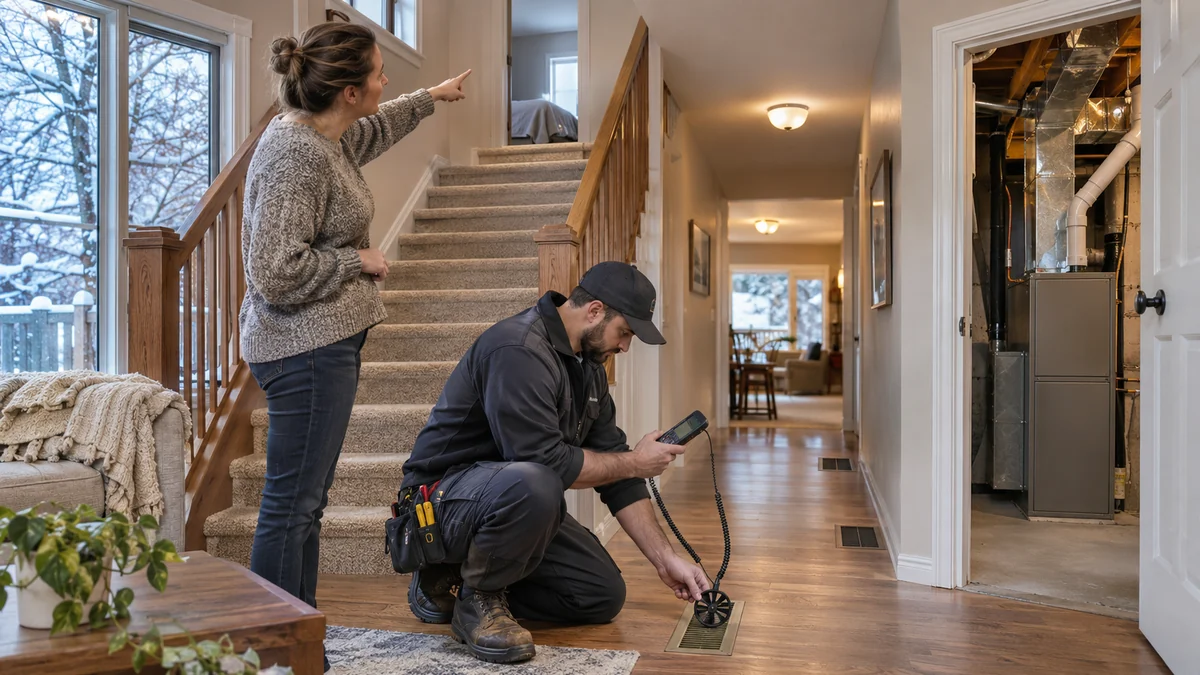
Uneven heating is a system problem, not automatically a furnace problem. If every room is cold, investigate heat production and total airflow. If one floor, addition or distant room is cold, the supply path, return path, balancing, duct losses, thermostat location and building envelope become more likely directions.
Read the room pattern first
Whole house: start with furnace output, filter and system airflow. One area: compare the branch duct, return path and room heat loss. After renovation: check whether walls, doors, registers or duct routes changed.
Map temperatures before changing the system
On a representative cold day, record the thermostat setpoint and room temperatures at the same height, away from windows and registers. Note which doors are open, whether blinds are closed and whether the furnace is actively heating. A simple room map reveals whether the problem follows a floor, exterior wall, addition or duct branch.
| Pattern | Possible direction | What to compare |
|---|---|---|
| Upper floor cold in winter | Weak supply, inadequate return, stack effect or attic/air leakage | Supply airflow, door position and ceiling/exterior exposure |
| One addition is cold | Long or undersized branch, duct loss, changed heat load | Duct route, insulation and renovation history |
| Rooms cold with doors closed | Restricted return-air path | Temperature and airflow with doors open versus closed |
| All rooms cold | Furnace output, filter, blower or main-duct restriction | Temperature trend and system-wide airflow |
| Windward rooms become colder | Envelope air leakage and exposure | Weather, drafts and exterior-wall locations |
Safe checks before changing dampers or registers
- Replace a visibly loaded filter with the correct size and supported type.
- Open normal supply registers and make sure returns are not covered.
- Confirm furniture, rugs and storage are not restricting airflow.
- Check whether a closed interior door makes the room noticeably colder.
- Record whether the issue changes during strong wind or extreme cold.
Do not close many registers to force heat elsewhere. That can increase system pressure, reduce total airflow and create noise or furnace limit trips. Existing balancing dampers should be adjusted only with a clear understanding of the duct system and measured results.
Supply and return air must work together
Supply ducts deliver heated air; return paths bring room air back to the furnace. A room with supply air but no practical return path can become pressurized when the door closes, limiting further delivery. Undercuts, transfer paths, central returns and dedicated returns all behave differently.
Patterson Mechanical provides heating and ductwork assessment across Manitoba. Diagnosis may include register airflow, temperature, total external static pressure, branch condition and return-air pathways.
Duct leakage, insulation and route
A disconnected or leaking branch can lose heated air before it reaches the room. Ducts through crawlspaces, garages, attics or other cool areas may also lose heat if they are not appropriately sealed and insulated. Accessible seams require suitable duct-sealing materials; ordinary cloth-backed “duct tape” is not a durable diagnostic solution.
Hidden ducts should not be cut open based on guesswork. Measurements at the furnace and registers can identify whether investigation should focus on the main trunk, a branch or the room itself.
When the furnace is part of the problem
Low blower airflow, an incorrect speed setting, a dirty wheel, restricted coil, limit cycling or reduced burner output can affect the entire distribution system. Equipment that is oversized can also create short cycles and poor mixing. Patterson Mechanical provides furnace and airflow diagnosis across Manitoba when the problem is not confined to one branch.
For a furnace that runs continuously while temperatures fall, use our constant-runtime diagnostic guide. In Winnipeg homes with additions and finished basements from different renovation periods, review our Winnipeg heating service coverage.
What a complete comfort assessment should deliver
Ask for a room-pattern diagnosis, not only a furnace-size opinion. The useful outcome is a prioritized scope: correct the filter or blower issue, restore a disconnected branch, improve a return path, balance measured airflow, seal or insulate ducts, or refer an envelope concern for appropriate work.
Tired of one room staying cold?
Map the affected rooms and when the problem appears. We can measure furnace airflow, supply delivery, return paths and duct condition before recommending changes.
Request Furnace ServiceFrequently Asked Questions
Why is one room colder than the rest of the house?
The room may have weak supply airflow, an inadequate return path, duct leakage, greater exterior heat loss or a changed load after renovation. The pattern and measurements identify the direction.
Should I close basement vents to send more heat upstairs?
Closing many registers can increase duct pressure and reduce total airflow. Balancing should use measured supply and return performance rather than widespread closure.
Can an oversized furnace cause uneven heating?
Yes. An oversized furnace may satisfy the thermostat quickly and stop before temperatures mix evenly, but duct and envelope problems can create the same complaint.
Do cold rooms mean I need a bigger furnace?
Not automatically. A larger furnace cannot repair a disconnected duct, poor return path or room air leakage and may create new airflow and cycling problems.
What measurements help diagnose uneven heating?
Room temperatures, register airflow and temperature, total external static pressure, furnace temperature rise, branch condition and return-path testing are useful.