
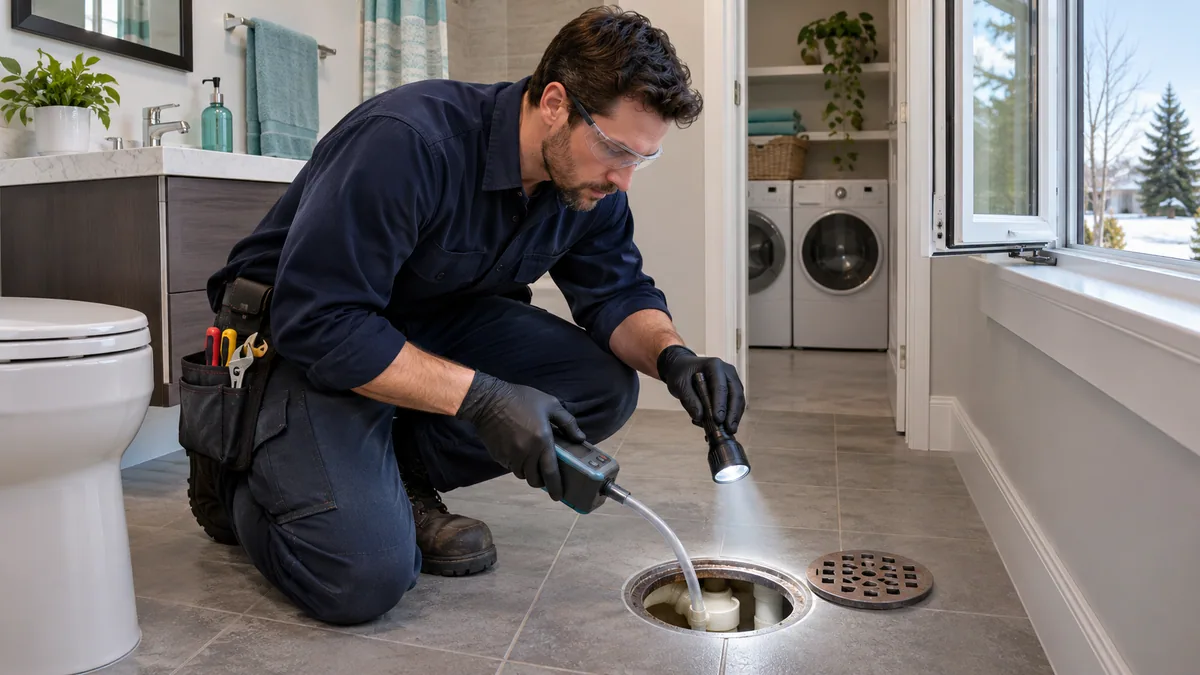
A sewer-like smell does not automatically mean the main sewer is blocked. Odours can enter through a dry trap, failed toilet seal, open cleanout, damaged drain or venting problem. A blockage becomes more likely when the smell appears with slow drainage, gurgling, changing toilet levels or wastewater at a low fixture.
Quick distinction
Odour alone: check for an infrequently used drain, dry trap or obvious open drain connection. Odour plus multiple slow fixtures or backup: stop water use and arrange drain service. Strong odour with headache, dizziness, breathing irritation or an unknown gas source: leave the area and seek emergency guidance.
Common odour sources inside a home
- Dry trap: water evaporated from an unused floor drain, sink or shower trap.
- Toilet seal: odour near the base, sometimes with movement or leakage.
- Open cleanout: missing or loose cap on a drain access.
- Drain biofilm: organic buildup near a sink overflow or branch.
- Venting problem: pressure changes pull water from traps or release odours.
- Damaged pipe: a crack or disconnected fitting allows sewer air into the building.
The City of Winnipeg advises running water into sinks and tubs and pouring water into basement floor drains when odours follow municipal sewer cleaning. If the smell does not go away or sewage enters the home, it advises calling 311.
Signs that point toward a drainage restriction
| Observation | More consistent with |
|---|---|
| Smell at one unused drain, normal flow elsewhere | Dry trap or local seal |
| One sink is slow and smells | Local branch buildup or trap issue |
| Several fixtures gurgle or change level | Building drain, sewer or vent problem |
| Floor drain rises when washer or toilet runs | Downstream drainage restriction |
| Odour near toilet base | Toilet seal or connection |
Patterson Mechanical provides drain and sewer diagnosis for recurring odours and slow fixtures. Describe the exact location, timing, weather, fixtures in use and whether anyone experiences symptoms.
A safe homeowner check
- Ventilate if the odour is mild and it is safe to remain.
- Run water briefly into an infrequently used sink, shower or tub.
- Pour water into a dry basement floor drain, unless it is actively backing up.
- Confirm accessible cleanout caps appear in place without removing them.
- Note whether flushing or draining another fixture changes the smell or water level.
Do not use a flame to search for gas, enter a confined space, mix drain chemicals or ignore physical symptoms. Hydrogen sulfide can dull the sense of smell at higher exposure, so the absence of odour is not a safety instrument. A household smell can also be confused with fuel gas, so leave and follow emergency gas guidance if the source is uncertain.
Could it be natural gas instead?
Natural gas is odorized and can also smell like rotten eggs. Manitoba Hydro instructs occupants who smell that odour to leave immediately and call 911, the local emergency number or Manitoba Hydro from a safe location. Do not operate switches, phones, flames or vehicles in the suspected area. Only resume plumbing troubleshooting after a potential fuel-gas emergency has been ruled out.
Sewer odour often concentrates near a drain or toilet and may change after a trap is refilled, but that pattern is not a gas detector. When you cannot confidently identify a mild drain-specific source, choose the safer emergency response.
When a plumber needs to investigate
Arrange assessment when water does not stay in the trap, the toilet rocks or leaks, an odour returns after refilling traps, multiple fixtures gurgle, smoke testing may be required, or a hidden drain/vent defect is suspected. The work may include fixture-seal inspection, drain cleaning, camera inspection or a controlled plumbing smoke test.
If fixtures are backing up, follow the basement floor-drain response guide. If only one drain is affected, compare the symptoms in our clogged drain versus main sewer guide.
Prevent odours from returning
Keep seldom-used traps filled, correct leaks rather than repeatedly adding water, maintain drains without pouring grease or unsuitable material into them, and preserve access to cleanouts. For seasonal properties, ask a plumber about appropriate trap-seal protection and winterization rather than improvising products.
Odour keeps returning after traps are refilled?
Tell us where and when it occurs and which fixtures affect it. We can inspect the seals, drainage and venting directions without guessing from smell alone.
Request Drain or Sewer ServiceFrequently Asked Questions
Can a dry floor drain smell like sewage?
Yes. When trap water evaporates, sewer air can pass through. Refill the trap only if the drain is not backing up, and investigate if the water disappears repeatedly.
Does sewer gas always smell like rotten eggs?
Hydrogen sulfide has a characteristic rotten-egg odour, but household drain odours can contain several compounds and may smell musty or foul. Odour is not a reliable exposure meter.
Why does the smell appear when another fixture drains?
Pressure changes or a restriction may disturb trap seals or move sewer air. Note the fixture combination and have the drainage and venting assessed.
Can I pour bleach into the drain?
Do not mix cleaning chemicals or use them as a substitute for diagnosis. Product interactions and technician exposure can create hazards.
When should I leave the house?
Leave for strong or unexplained gas odour, physical symptoms, suspected fuel gas, an alarm, or any condition that feels unsafe, then seek emergency or utility guidance from outside.