
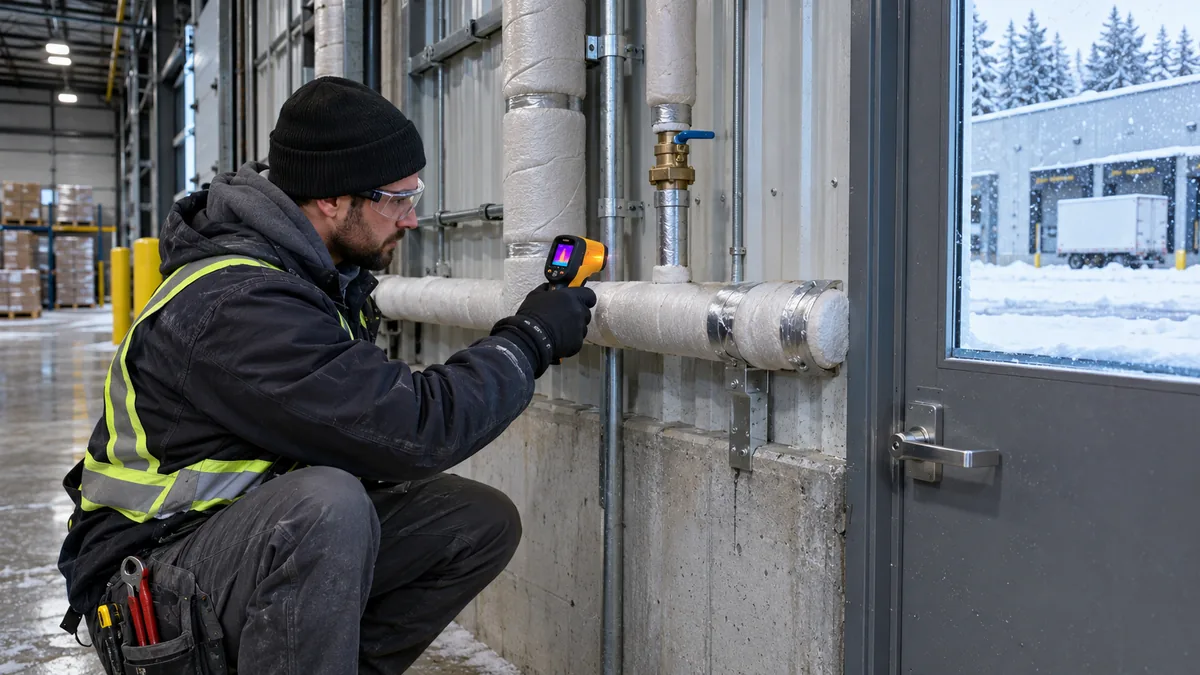
Commercial buildings can freeze in unexpected places: loading docks, vestibules, ceiling voids, vacant tenant areas, poorly heated service rooms and exterior walls changed by renovations. The goal is to find where cold air and vulnerable piping intersect before water flow stops.
Immediate priorities
Know the main and sectional shutoffs, keep vulnerable areas heated, seal uncontrolled air paths, insulate appropriate piping, monitor cold spaces and define an after-hours response. If a pipe is frozen, avoid open flame and prepare for leakage as the pipe thaws.
Find the building's freeze pathways
Walk the property during cold weather and after changes to doors, ceilings, ventilation or tenant use. Note plumbing near exterior walls, overhead doors, intake paths, roof spaces, crawlspaces and unoccupied rooms. A pipe can freeze because the surrounding air is cold even when the thermostat reads normally elsewhere.
Patterson Mechanical provides commercial plumbing service for frozen-pipe risks within its Manitoba service area.
| Risk area | Why it changes | Planning action |
|---|---|---|
| Loading dock or overhead door | Cold air infiltration and frequent opening | Check heating, seals and nearby piping |
| Vacant tenant space | Setback, closed doors or disabled equipment | Assign minimum conditions and inspections |
| Suspended ceiling/exterior wall | Hidden air leakage or displaced insulation | Inspect after renovations and cold complaints |
| Mechanical or sprinkler room | Small heater or damper failure | Monitor temperature and define specialist responsibility |
| Outdoor or shallow service exposure | Weather, frost depth and site conditions | Follow utility and municipal direction |
Use heat, air sealing and insulation together
Pipe insulation slows heat loss but does not create heat. Maintain the surrounding space, correct cold-air leakage and confirm warm air can reach the pipe. Heat tracing or specialty systems require correct selection, installation and inspection; do not improvise electrical heating around combustible materials or wet locations.
Set vacancy and shutdown rules
Document who checks an unoccupied space, how often, which temperature or alarm triggers action and who may adjust equipment. City of Winnipeg prevention guidance recommends knowing the main shutoff, insulating unheated areas, sealing air leaks and avoiding overly low thermostat settings. Insurance and lease requirements may add separate obligations.
Know whether the freeze is internal or underground
If all fixtures lose water, the service may be involved; if only part of the building is affected, internal distribution is more likely. Check for a utility outage and use the municipality's current frozen-service process. Do not excavate or assume responsibility until the location is established.
What to do when a pipe may be frozen
- Check for visible leakage, electrical hazards and affected areas.
- Locate and prepare the correct shutoff.
- Stop using open flame or uncontrolled high heat.
- Contact the appropriate licensed contractor or utility/municipality.
- Monitor the pipe and surrounding area during thawing because a split may leak only after ice clears.
- Document the location and contributing conditions for permanent correction.
Fire-suppression piping belongs with the qualified fire-protection provider. Gas, electrical and building-envelope hazards also require the appropriate specialists.
Correct the cause after service returns
Repairing a split pipe restores water but does not correct the cold pathway. Review door operation, heating, ventilation, insulation, air leakage, ceiling changes and operating schedules. Add the condition to the commercial plumbing maintenance plan and the building's winter emergency procedure.
For heating outages that threaten the property, use our Manitoba winter HVAC emergency guide.
Find the freeze risk before the next cold snap
We can review vulnerable commercial plumbing, shutoffs and recurring freeze locations and explain which repairs belong in the building's winter plan.
Request Commercial ServiceFrequently Asked Questions
What temperature should an empty commercial building be kept at?
There is no safe universal number for every building. Piping location, air leakage, envelope, equipment and insurance requirements matter. City of Winnipeg guidance says thermostats should not be set lower than 12°C when away.
Does pipe insulation prevent freezing by itself?
No. Insulation slows heat loss, but the area still needs sufficient heat and protection from cold-air leakage.
Can staff thaw a frozen pipe with a torch?
No. Open flame creates fire and damage risk. Follow the building emergency plan and use qualified help for unsafe, concealed or uncertain conditions.
Why do pipes freeze after a renovation?
Air barriers, insulation, ceilings, doors and ventilation paths may have changed. A pipe that once received warm room air can become isolated in a cold cavity.
Who handles a frozen underground service in Winnipeg?
Check the City of Winnipeg's current frozen-water-pipe process. Responsibility and response depend on where the freeze is located, so confirm the service condition before planning work.