
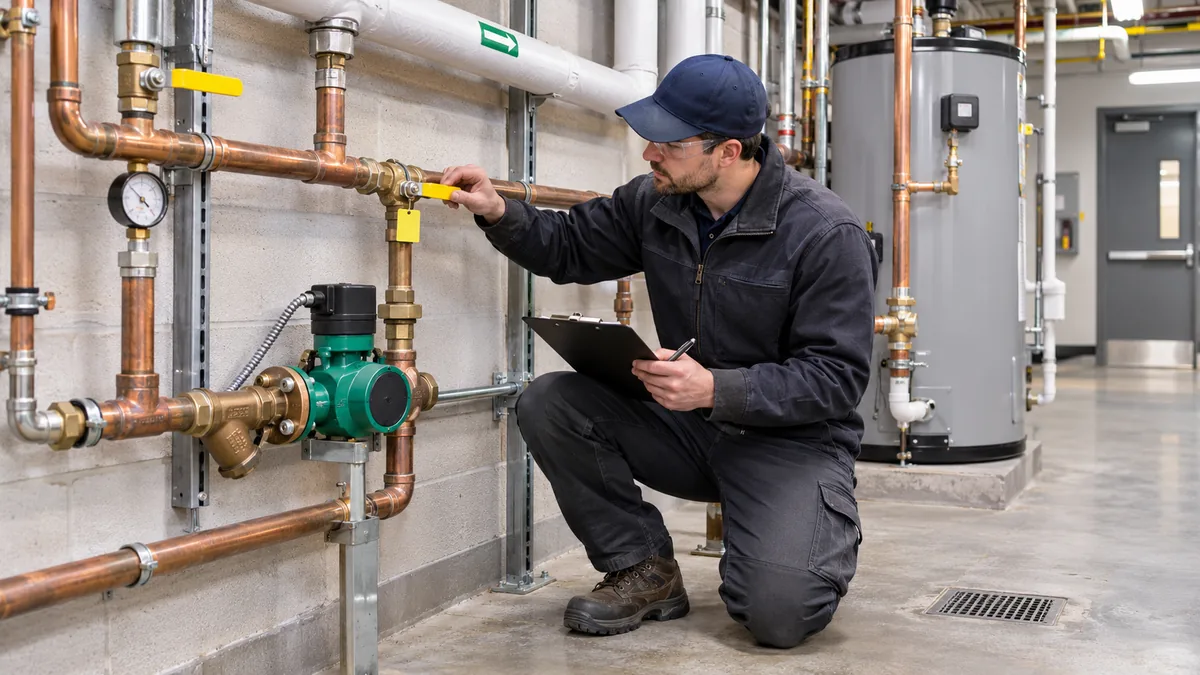
Commercial plumbing maintenance is not a larger version of a household checklist. Occupancy, lease responsibilities, public washrooms, kitchens, process use, shutdown costs and after-hours access determine what deserves attention and how quickly a small issue can become operational.
Core checklist
Create a plumbing asset map, label main and sectional shutoffs, record leaks and pressure complaints, inspect fixtures and drains by use, maintain water-heating and pump systems, and test the emergency response plan before winter or a shutdown.
Start with the asset and shutoff map
Identify the water service, meter, main shutoff, sectional valves, water heaters, recirculation, pumps, sumps, sewage ejectors, floor drains and critical fixtures. Record which tenant or area each valve isolates. A label is useful only when the valve can be reached and authorized staff know the plan.
Patterson Mechanical provides commercial plumbing maintenance and repair across its Manitoba service area.
| Frequency | Building observation | Qualified-service trigger |
|---|---|---|
| Routine walkthrough | Leaks, odour, slow drainage, running fixtures, pump alarms | Recurring or spreading problem |
| Monthly or site-defined | Shutoff access, floor-drain condition, mechanical-room housekeeping | Seized, leaking or unidentified valve |
| Seasonal | Exterior faucets, vulnerable piping, unheated areas, sump discharge | Freeze exposure or unreliable heat |
| Annual planning | Repair history, water use, repeated blockages and capital items | Replacement or investigation project |
Download the building-owner checklist
Use the printable two-page worksheet to map shutoffs, record recurring conditions and assign corrective work.
Domestic water and leak records
Document location, date, duration and suspected source of every leak. Repeated ceiling stains, corrosion at the same fitting, unexplained water use or pressure changes deserve investigation. Do not accept repeated tightening or temporary containment as a permanent repair plan.
Backflow, pressure and corrosion records
Identify any backflow-prevention devices and document who is responsible for the testing or service required for that device and jurisdiction. Keep test reports with the plumbing asset record rather than treating the device as an untracked fitting. Backflow work belongs with the appropriately qualified provider.
Pressure complaints should be recorded by location, time and affected fixtures. A high, low or fluctuating reading can reflect the service, controls, valves, demand or distribution; do not adjust pressure controls without diagnosing the system. Record visible corrosion by pipe material and location, and distinguish cosmetic surface change from active leakage or deterioration that needs assessment.
Fixtures and occupied spaces
Public and staff washrooms can waste substantial water or become unusable when flush valves, faucets, traps or seals fail. Track the fixture, frequency and operating condition. A complaint log by room helps separate an isolated fixture from a building-wide pressure or hot-water issue.
Drains and sewer warning signs
One slow fixture often points to a local problem; several fixtures or the lowest drains responding together can indicate a larger blockage. Avoid routine chemical drain use that obscures the cause or creates a technician exposure. Compare diagnostic methods in our guide to sewer cameras, drain snakes and hydro jetting.
Grease interceptors, roof drainage and specialty systems
Restaurants and food-service tenants should document who inspects and services grease interceptors, where records are kept and which discharge or local requirements apply. The interval should follow the actual equipment, use and authority requirements rather than a universal schedule copied from another building.
Roof and storm drainage, fire-suppression piping, process water and other specialty systems need clearly assigned responsibility. The City of Winnipeg's commercial inspection information treats potable water, drainage, venting, roof drainage and several specialty systems as distinct inspection areas. A general plumbing checklist should identify these interfaces without implying that one contractor or maintenance agreement covers all of them.
Water heating and recirculation
Record temperature complaints, recovery problems, pump noise, leakage and control faults. The correct inspection and maintenance tasks depend on the equipment and application. Do not change temperatures without considering scalding, process, sanitation and system requirements.
Pumps, alarms and drainage
Sump and sewage-ejector systems need accessible controls, working alarms and a response plan. Note which loads depend on the pump and what happens during an outage. An alarm should not be silenced without identifying the high level or control fault.
Winter and vacancy risks
Loading areas, vestibules, exterior walls, suspended ceilings, vacant tenant units and poorly heated service rooms deserve a pre-winter review. Our commercial frozen-pipe prevention guide provides a building-specific planning framework.
Define responsibilities before an emergency
- Who may close the main water service?
- Who contacts tenants, restoration providers and the plumber?
- Which fixtures or processes cannot be interrupted?
- Where are keys, roof access and mechanical-room records?
- What work belongs to the owner, tenant or specialist under the contract?
This article is operational guidance, not a lease interpretation. A commercial maintenance program should state the assets, tasks, frequency, records and exclusions it actually covers.
Build a plumbing plan around the actual property
We can review the building's fixtures, drains, water heating, pumps and winter risks, then separate routine maintenance from repairs and capital work.
Request Commercial ServiceFrequently Asked Questions
How often should commercial plumbing be inspected?
Use a risk-based schedule. High-use fixtures, pumps and problem areas may need frequent observation, while qualified service should follow equipment, code and building requirements.
Should every shutoff valve be operated during a walkthrough?
Not without a plan. Old or critical valves can fail when operated. Identify and assess them, then schedule testing or replacement with the right isolation and contingency.
What do repeated drain blockages mean?
They can reflect the material entering the drain, pipe condition, slope, roots, grease or an unresolved obstruction. Repeated clearing without diagnosis should trigger a broader review.
Are commercial plumbing repairs included in maintenance agreements?
It depends on the written scope. Inspections and preventive tasks may be included while repairs, parts, after-hours work or specialty services are quoted separately.
What should staff do during a major leak?
Follow the building's emergency plan, protect people from electrical and slip hazards, isolate water only when authorized and safe, and contact the appropriate emergency and restoration resources.