
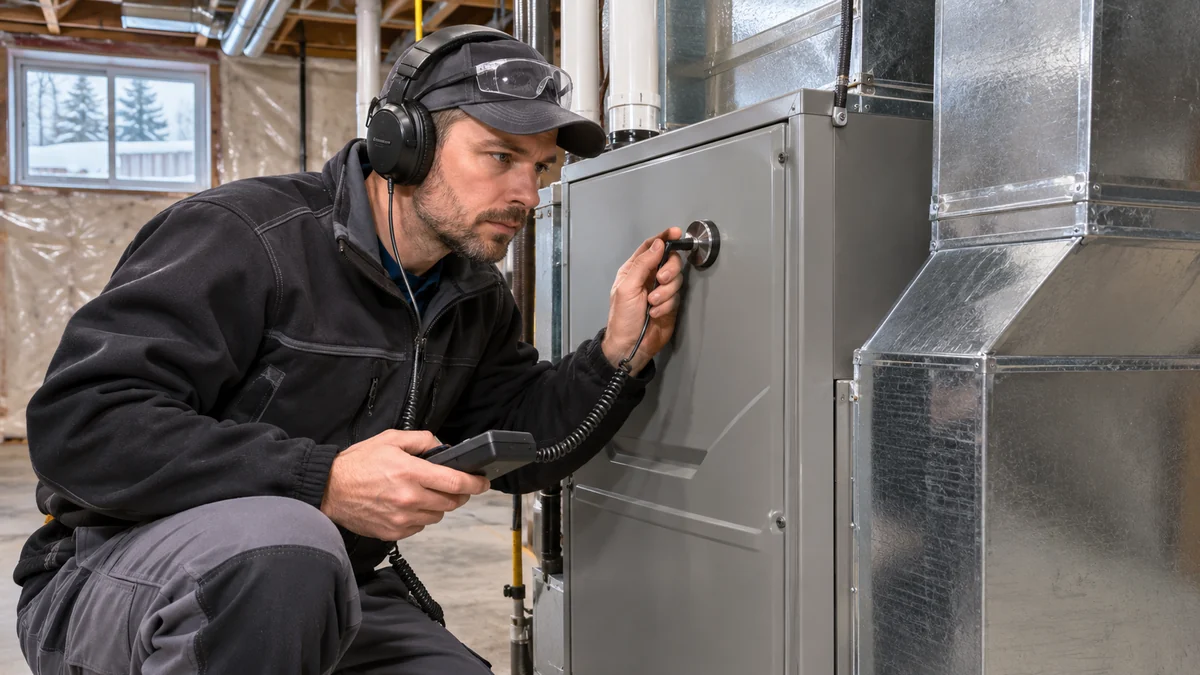
Furnaces and ductwork are not silent. Normal operation can include a thermostat click, inducer and blower hum, airflow, and light metal expansion. The important change is a sound that is new, louder, repeated at the same stage or accompanied by odour, soot, weak heat or shutdown.
Noise triage
Shut down and call promptly for a loud ignition bang, hissing with gas odour, grinding, screeching, smoke, scorching or repeated breaker trips. Record and schedule diagnosis for persistent rattling, whistling, buzzing or duct popping that is getting worse.
Match the sound to when it occurs
Record whether the noise happens before ignition, when the flame starts, when the blower begins, throughout the cycle or at shutdown. A short video captured from a safe distance can preserve the sound and timing. Do not remove panels or reach toward moving equipment to get a better recording.
| Sound | Possible direction | Priority |
|---|---|---|
| Bang at ignition | Delayed ignition or burner concern | Turn off and arrange prompt service |
| Light popping in ducts | Sheet-metal expansion or pressure change | Monitor; assess if severe or new |
| Squeal or screech | Blower motor, bearing, belt on older equipment or airflow issue | Shut down if loud or worsening |
| Rattle or vibration | Loose panel, blower wheel, duct connection or internal component | Schedule diagnosis |
| Whistle | Filter, return, register or duct restriction | Check accessible airflow conditions |
| Buzz or loud hum | Transformer, motor, capacitor, relay or loose component | Call if persistent or paired with failed startup |
| Hiss with gas odour | Possible gas leak | Leave immediately and call Manitoba Hydro |
Why a bang at ignition is different from duct popping
A sharp bang at the furnace as burners light can indicate delayed ignition and needs prompt professional attention. A lighter pop from a supply trunk or register after the blower starts may be sheet metal responding to pressure and temperature. Timing and location separate the two better than the word “bang.”
Do not keep restarting a furnace that ignites roughly. Turn it off and report the sound, any odour, visible soot and whether it happens on every call.
Squealing, grinding and blower-related sounds
High-pitched squealing or grinding can involve a motor, bearings, blower wheel or—in older equipment—a belt. Continued operation may increase damage or stop airflow, which can also overheat the furnace. Shut the system down if the sound is loud, metallic or rapidly worsening.
A technician should inspect the blower assembly, motor current, wheel condition, mounts and available airflow rather than treating the noise alone.
Whistling and airflow restriction
Whistling can come from a loaded or poorly fitted filter, undersized return, closed register, narrow gap or duct leak. Check that the correct filter is installed, normal grilles are open and furniture is not blocking returns. Do not operate without a filter or close more registers to redirect air.
If the noise changes with doors or specific registers, include that in the service notes. Our uneven-heating and airflow guide explains how distribution patterns help locate the issue.
What a useful noise diagnosis includes
- The exact startup or shutdown stage when the sound begins
- Location at the furnace, return, supply trunk or individual register
- Filter, blower and duct-static condition
- Ignition and combustion observation by a qualified technician
- Motor, wheel, mounts, panels and duct connections
- Whether the sound changes with airflow or heat stage
Patterson Mechanical provides furnace noise diagnosis and repair across Manitoba. Save a short recording from outside the cabinet and note what the thermostat, burners and blower were doing when the sound occurred.
Has the furnace developed a new sound?
Record when it occurs and where it is loudest without opening the cabinet. We can separate ignition, blower, electrical, airflow and duct noise.
Request Furnace ServiceFrequently Asked Questions
Is it normal for a furnace to make noise?
Some clicking, fan sound, airflow and light duct expansion are normal. New, loud, metallic, repeated or worsening sounds should be investigated.
Why does my furnace make a bang when it starts?
A bang at ignition can indicate delayed ignition and should be assessed promptly. A lighter pop later in the cycle may come from expanding ductwork.
Can a dirty filter make the furnace whistle?
Yes. A loaded, restrictive or poorly fitted filter can increase pressure and noise. Return and supply restrictions or duct gaps can create similar sounds.
Should I turn off a squealing furnace?
Turn it off when the sound is loud, metallic, worsening or accompanied by weak airflow or overheating. A motor or blower fault can worsen with continued operation.
What furnace sound could indicate a gas leak?
Hissing paired with a rotten-egg or sulphur-like odour is an emergency. Leave without operating switches and call Manitoba Hydro from a safe location.