
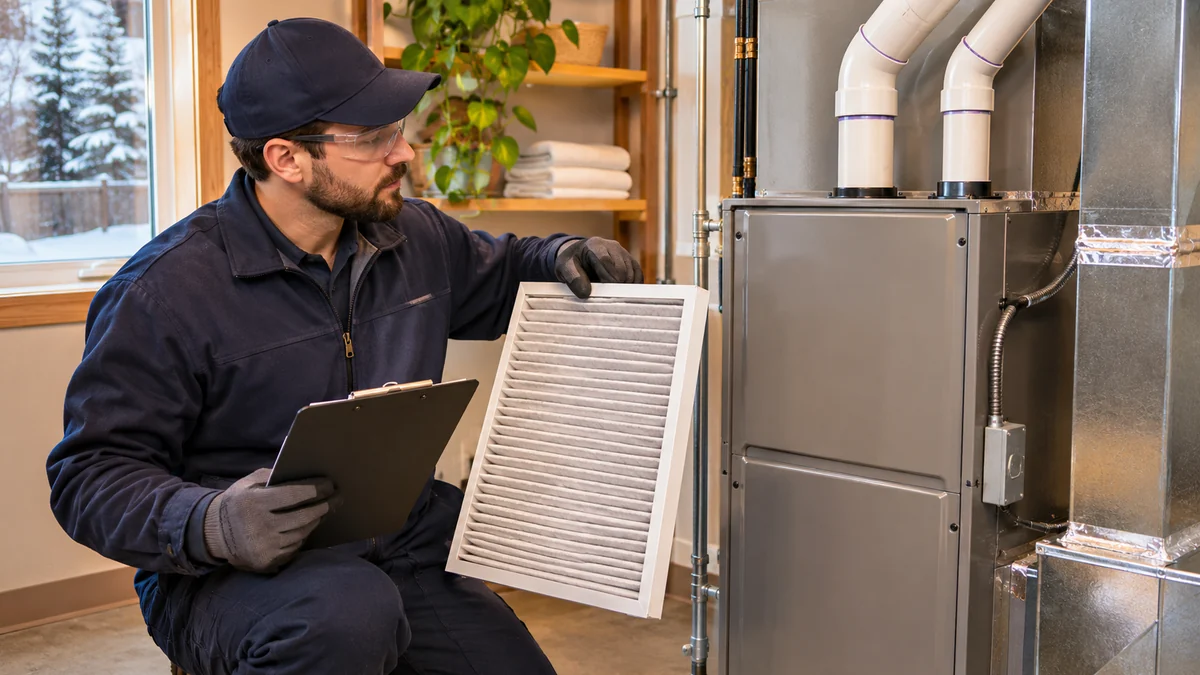
A furnace maintenance checklist should not turn homeowners into gas technicians. Homeowners can keep airflow paths clear, inspect accessible exterior conditions and maintain alarms. Qualified service covers combustion, gas, venting, electrical controls, heat exchanger, blower performance and a complete operating cycle.
Maintenance at a glance
Homeowner: check the filter, thermostat, grilles, furnace area, exterior vents and CO alarms. Technician: inspect venting, combustion air, heat exchanger, burners, ignition, safeties, blower, electrical components, condensate and complete operation.
Before regular heating season
- Run the furnace before the first severe cold and confirm it starts, heats and shuts down normally.
- Install the correct clean filter and record its size and installation date.
- Confirm return and supply grilles are open and unobstructed.
- Test smoke and carbon-monoxide alarms according to their instructions.
- Remove storage and combustible materials from around the furnace and water heater.
- Inspect exterior intake and exhaust openings from the ground.
- Arrange qualified maintenance before peak service demand.
City of Winnipeg and Manitoba Hydro guidance both emphasize professional furnace service and keeping outdoor vents clear. Do not wait for the first no-heat event to locate the model number, service switch and filter size.
Homeowner and technician responsibilities
| Item | Homeowner scope | Qualified-service scope |
|---|---|---|
| Filter | Inspect and replace with correct size/type | Verify fit, pressure and supported filtration |
| Thermostat | Check settings and batteries | Verify demand, wiring and control operation |
| Exterior vents | Clear loose snow and visible debris safely | Inspect full vent path, slope, termination and proving |
| Combustion | Watch for odour, soot or alarms | Test burners, gas pressure and combustion |
| Heat exchanger | No internal homeowner task | Inspect condition using applicable procedures |
| Blower and ductwork | Keep grilles open and report noise | Inspect wheel, motor, airflow, temperature rise and static pressure |
| Condensate | Report leaks and keep drain area accessible | Clean/test trap, drain, pump and safeties |
Filter checks need a condition-based schedule
Inspect the filter more often during renovation, heavy dust, wildfire smoke, continuous-fan use or when more occupants and pets increase loading. Replace it when dirty according to the manufacturer and system needs, not only by a calendar. A deeper or higher-rated filter is not automatically compatible with the existing cabinet and blower.
Use our furnace filter and MERV guide before changing filter type. Keep a photo of the installed direction arrow and write the correct size in the household record.
What qualified furnace service should document
- Venting and combustion-air condition
- Burner, ignition and flame-proving operation
- Gas pressure and combustion findings where applicable
- Heat-exchanger and cabinet condition
- Operating and safety controls
- Blower wheel, motor and electrical components
- Filter fit, temperature rise and airflow observations
- Condensate trap, drain and pump on high-efficiency equipment
- Full startup, heating and shutdown cycle
Ask for recorded deficiencies and priority—not simply a check mark. Patterson Mechanical provides furnace maintenance, repair and replacement planning in Manitoba.
During winter: a five-minute observation routine
After heavy snow, confirm vents and the gas meter remain clear. Listen for new sounds, check the filter, look for water near the furnace and compare actual room temperature with setpoint. A change in cycle pattern, odour, soot, weak airflow or repeat fault code deserves service.
Keep a service record with equipment model, serial number, filter size, maintenance dates, repairs, fault codes and warranty information. That history improves diagnosis and supports the later repair-versus-replacement decision.
Maintenance cannot guarantee against every breakdown
Maintenance reduces avoidable risk and can reveal developing problems, but parts can still fail without warning. The goal is verified safe operation, reliable airflow and a documented condition—not a promise that the furnace cannot stop during winter.
Is the furnace ready for sustained cold?
We can document the venting, combustion, safeties, blower, airflow, condensate and full operating cycle before winter demand peaks.
Request Furnace ServiceFrequently Asked Questions
How often should a furnace be professionally serviced?
Follow the furnace manufacturer's instructions and applicable requirements. Manitoba Hydro recommends professional annual furnace service in its homeowner heating guidance.
What furnace maintenance can a homeowner do?
Check and replace the correct filter, keep grilles clear, test alarms, keep the furnace area uncluttered and safely inspect exterior vents for loose snow or debris.
Does furnace maintenance include the heat exchanger?
Qualified service should assess heat-exchanger condition using procedures appropriate to the equipment. Homeowners should not open combustion sections to inspect it.
Should I change the filter every month?
Inspect it regularly and change it when loaded, following equipment and filter guidance. Conditions such as renovation, smoke, pets and continuous fan use can shorten the interval.
Will annual maintenance prevent every furnace failure?
No. It can identify wear, unsafe operation and airflow problems, but no checklist can guarantee that every electrical or mechanical component will continue operating.