
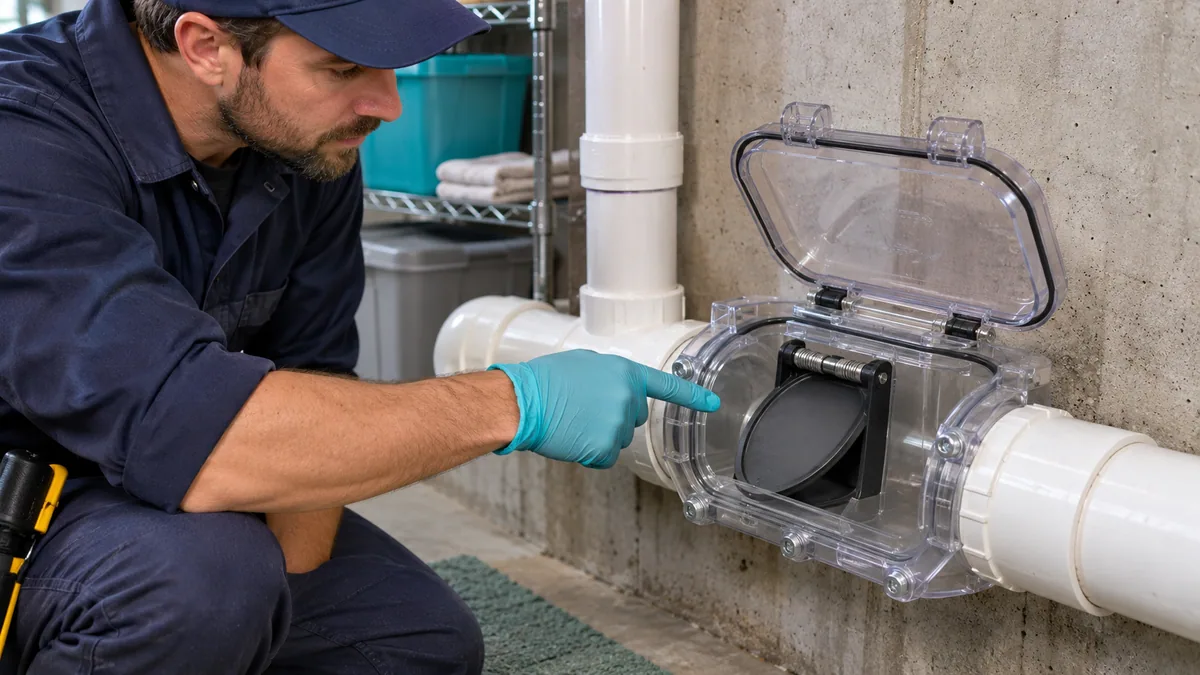
A backwater valve is a one-way device in the building drain. It normally allows wastewater to leave the home, then closes when flow reverses from an overloaded sewer. It is a layer of protection—not a guarantee against every kind of basement water entry.
Winnipeg essentials
The City says homes built after 1979 were required to have a backwater valve, while homes built since 1990 were required to have a sump-pit drainage system. Older homes may have been retrofitted. A licensed plumber can confirm what is installed, whether it protects the intended fixtures and what maintenance it needs.
What a backwater valve does
When the public sewer level rises above the private connection, reverse flow pushes the valve's flap or gate closed. Properly arranged basement fixtures are isolated from that backflow. While the valve is closed, wastewater from protected fixtures also cannot leave normally, so occupants should minimize or stop water use.
A valve does not stop groundwater through foundation cracks, overland water at windows, a failed sump pump, a local drain blockage upstream of the valve or every possible plumbing defect. The City distinguishes basement sewer backup from overland seepage for this reason.
When an assessment makes sense
- The home has no known backwater valve or the owner cannot locate one.
- The basement has fixtures below street level.
- There is a history of sewer backup or heavy-rain drainage concerns.
- A renovation will add or alter basement plumbing.
- An existing valve is inaccessible, damaged, dirty or has no maintenance record.
- The weeping-tile or sump arrangement is unknown.
Patterson Mechanical provides Winnipeg drain, sewer and backflow-protection assessment. Installation decisions should follow the actual drainage layout, not an online one-size-fits-all diagram.
Valve and sump planning belong together
Winnipeg's flood-protection guidance notes that a backwater valve and sump-pit drainage system are commonly considered together. When a valve closes, foundation drainage connected on the wrong side may be unable to discharge and can contribute to basement flooding. A compliant sump arrangement collects foundation drainage and pumps it outside to an allowed location.
Do not route sump discharge into a floor drain. The City states that this is illegal and adds unnecessary flow to the wastewater system. Discharge must also avoid streets, sidewalks and neighbouring property.
Permits, placement and access
City plumbing guidance requires protected below-grade fixtures to be arranged correctly and shows that backwater valves need appropriate placement. Retrofitting often means opening part of the basement floor. Confirm permit and inspection requirements before work begins and make sure the finished valve remains accessible for inspection and cleaning.
The former Winnipeg Basement Flooding Protection Subsidy Program is repealed, so homeowners should not budget on the assumption of a current general subsidy. Verify any current program directly with the City before relying on it.
Backwater-valve maintenance
- Follow the valve manufacturer's instructions and any installer schedule.
- Keep the access cover visible and reachable; do not finish flooring permanently over it.
- With the system in safe normal conditions, inspect for debris, damage and free movement as directed.
- Clean and reassemble seals and covers correctly.
- Record the date and findings; arrange service if the mechanism sticks or parts are damaged.
Federal flood-readiness guidance recommends regular inspection and describes cleaning at least twice per year, while also directing owners to the specific model manual. Treat that as a general starting point, not permission to open a valve during a backup or ignore a manufacturer's different requirements. A simple log should record the date, flap movement, debris, seal condition and person completing the check.
Normally open, normally closed and alarm-equipped valves
Valve designs do not all behave the same way. Normally open models close when reverse flow lifts the gate; normally closed models open only for outgoing discharge. Placement depends on the plumbing layout and local requirements. Some systems can add a closure alarm so occupants know to stop using water. Selection belongs in the design and permit conversation with the plumber rather than a product-only purchase.
Do not open the valve during an active backup or force it closed as a substitute for repair. After any backup, have the valve and upstream drainage checked. For immediate response, use our Winnipeg sewer-backup checklist; for local service, visit Patterson Mechanical in Winnipeg.
Not sure what protects your basement?
We can identify the existing valve and sump arrangement, explain its limitations and outline any maintenance or installation work that deserves consideration.
Request Drain or Sewer ServiceFrequently Asked Questions
Do all Winnipeg homes have a backwater valve?
No. The City says valves were required for homes built after 1979, while some older homes were retrofitted. Existing condition and placement still need confirmation.
Can I use plumbing while the valve is closed?
Avoid it. Wastewater from protected fixtures cannot leave normally while the valve is blocking reverse flow and may back up inside the home.
Does a backwater valve replace a sump pump?
No. They manage different water paths. Winnipeg guidance commonly pairs a valve with a properly arranged sump-pit drainage system.
Is there still a Winnipeg backwater-valve subsidy?
The former general Basement Flooding Protection Subsidy Program was repealed. Verify any current assistance directly with the City rather than relying on older web pages.
How often should a backwater valve be cleaned?
Follow the manufacturer and installer guidance, and inspect it regularly enough to keep it free of debris and operating. Frequency depends on the valve and system conditions.