
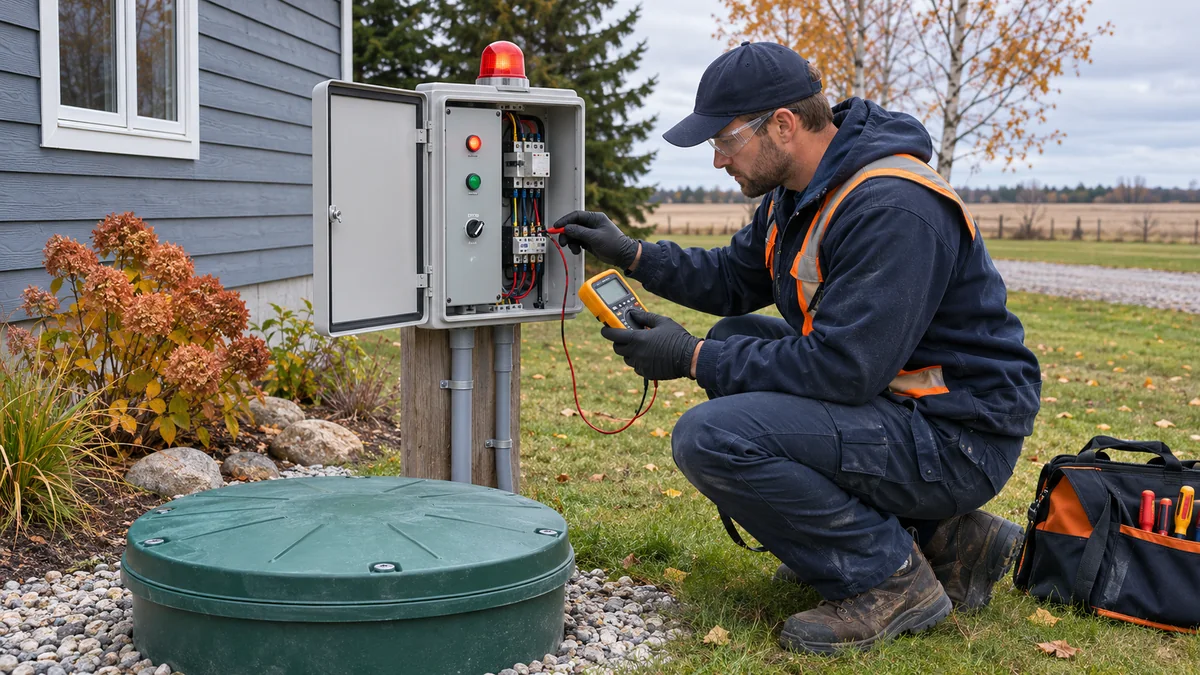
A septic alarm is intended to warn before wastewater backs up or solids move where they should not. It can indicate a pump, float, control, power or downstream problem. Silencing the buzzer does not solve the cause.
What to do now
Reduce water use immediately. Confirm whether the alarm light remains on, check the labelled breaker only if it is safe and accessible, and call for service if the alarm persists. Never enter a septic tank or reach into a pump chamber.
Common reasons a septic alarm activates
- Pump failure or blockage
- Tripped breaker, unplugged equipment or failed power supply
- Stuck or failed float
- Alarm or control-panel fault
- Frozen or blocked discharge line
- High inflow from leaks or unusually heavy water use
- Saturated or restricted downstream disposal area
Safe homeowner checks
- Reduce showers, laundry, dishwashing and other water use.
- Look for a visible alarm light or displayed fault without opening live electrical compartments.
- Check the clearly labelled breaker once; if it trips again, leave it off.
- Look for obvious surface wastewater or unusual odour from a distance.
- Keep children and pets away from the tank and disposal area.
What not to do
- Do not enter the tank or pump chamber.
- Do not bypass floats, alarms or electrical protection.
- Do not keep resetting a breaker.
- Do not pump a tank during flooding without professional guidance; groundwater can create buoyancy concerns.
- Do not continue normal water use while waiting for service.
Manitoba's onsite wastewater homeowner guidance warns that an activated pump alarm can lead to sewage backup or solids entering the disposal field. It recommends checking power and consulting a professional to inspect controls, alarm and pump.
Patterson Mechanical provides septic pump service and troubleshooting for rural Manitoba systems. Cold-weather failures may also require frozen septic-system repair.
Information that helps the service call
Note when the alarm started, recent water use, weather, whether the breaker tripped, whether the pump can be heard and any history of freezing or similar alarms. Our septic-system maintenance guide explains longer-term prevention.
Why reducing water use matters
An alarm often means the liquid level has reached a point where normal pump-down did not occur. Every shower, toilet flush, dishwasher cycle or laundry load can add more water while storage capacity is limited. Reducing use helps lower the chance of wastewater backing up into the building or surfacing outdoors while service is arranged.
Do not assume the pump itself has failed. The cause can involve the float, control panel, electrical supply, discharge piping, a frozen component or unusually high inflow. A technician needs to test the system rather than replacing parts from the alarm signal alone.
After the immediate problem is corrected
Ask what triggered the alarm, what was tested and whether the tank or field showed signs of a broader issue. Record the date, weather conditions and repair. If alarms recur, that history can help distinguish an intermittent control fault from seasonal freezing, excess inflow or a capacity problem. Continue routine septic maintenance; an alarm repair does not replace tank inspection or pumping when those services are due.
What red and yellow alarm lights may mean
Alarm colours are not universal. On many pump-control panels, a red beacon signals a high liquid level or another alarm condition. On some aerobic systems, a yellow light can indicate an aerator, service or timer-related fault. Read the label and manual for the installed panel before interpreting the colour; do not assume every red or yellow light means the same component failed.
| System or signal | Possible meaning | Safe response |
|---|---|---|
| Pump-tank high-level alarm | Liquid rose above the normal operating range | Reduce water use and arrange diagnosis |
| Timed-dose panel alarm | Pump, float, timer, power or discharge problem | Record lights and switch positions; do not change timer settings |
| Aerobic-system service light | Aerator or treatment component needs attention | Follow the panel manual and contact the service provider |
| Alarm after heavy rain or thaw | High inflow, saturated conditions or an unrelated component fault | Reduce use; recurrence still requires investigation |
Can you silence or reset the alarm?
Many panels have a silence control that stops the horn but leaves the warning light on until the condition clears. Silencing is not a repair. SJE Rhombus documentation for one timed-dose panel, for example, describes a Test/Normal/Silence switch and automatic reset after the alarm condition clears. Use only controls identified by the installed panel's instructions. Do not leave a pump forced into manual operation or repeatedly reset a breaker.
What a technician checks
Diagnosis may include the liquid level, floats, pump amperage, control power, contactor or relay, timer, check valve, discharge line and evidence of freezing or excess inflow. The service cost therefore depends on whether the problem is a float adjustment, electrical component, pump replacement, frozen discharge or a larger septic-field issue. Ask for the diagnosed cause and the test results rather than replacing the pump from the alarm alone.
Need help with this system?
Patterson Mechanical serves Stonewall, Winnipeg and Manitoba's Interlake region. We will confirm service availability and an appointment window for your property.
Request ServiceFrequently Asked Questions
What does a red septic alarm light mean?
It commonly signals a high liquid level or another panel alarm, but colours are not universal. Check the panel label and manual, reduce water use and arrange diagnosis.
What does a yellow septic light mean?
On some aerobic systems it indicates an aerator or service issue. On another panel it may mean something different, so identify the system and consult its manual.
Can I silence the septic alarm?
Many panels let you silence the horn while the warning light remains. Silencing does not fix the problem; continue limiting water and arrange service.
Can heavy rain trigger a septic alarm?
Yes. High inflow or saturated conditions can raise the level, but a float, pump, control, discharge or field problem can occur at the same time.
Is a septic alarm an emergency?
Treat it as urgent. Reduce water use immediately. Sewage backing up indoors, surfacing outdoors or reaching electrical components requires faster emergency response.