Selkirk's water system is one of the city's most important pieces of infrastructure. Unlike Winnipeg, which relies on Shoal Lake water, Selkirk's municipal drinking water comes from groundwater wells, including wells in the city and nearby R.M. of St. Andrews. The city treats this water at the Selkirk Water Treatment Plant before it enters the distribution system.
For homeowners, the important point is not just where the water comes from. It is what that water can mean for the equipment inside your home. In Selkirk and the surrounding area, groundwater from carbonate or limestone-based aquifers can carry dissolved minerals. That does not mean the water is unsafe, but it can contribute to hard water, scale buildup and mineral deposits in water-connected systems.
Why Selkirk Water Can Be Hard
A Red River Planning District drinking water plan noted that Selkirk's municipal water supply came from groundwater wells drawing from the carbonate aquifer, and that the source water was typically high in hardness, dissolved solids and dissolved chlorides.
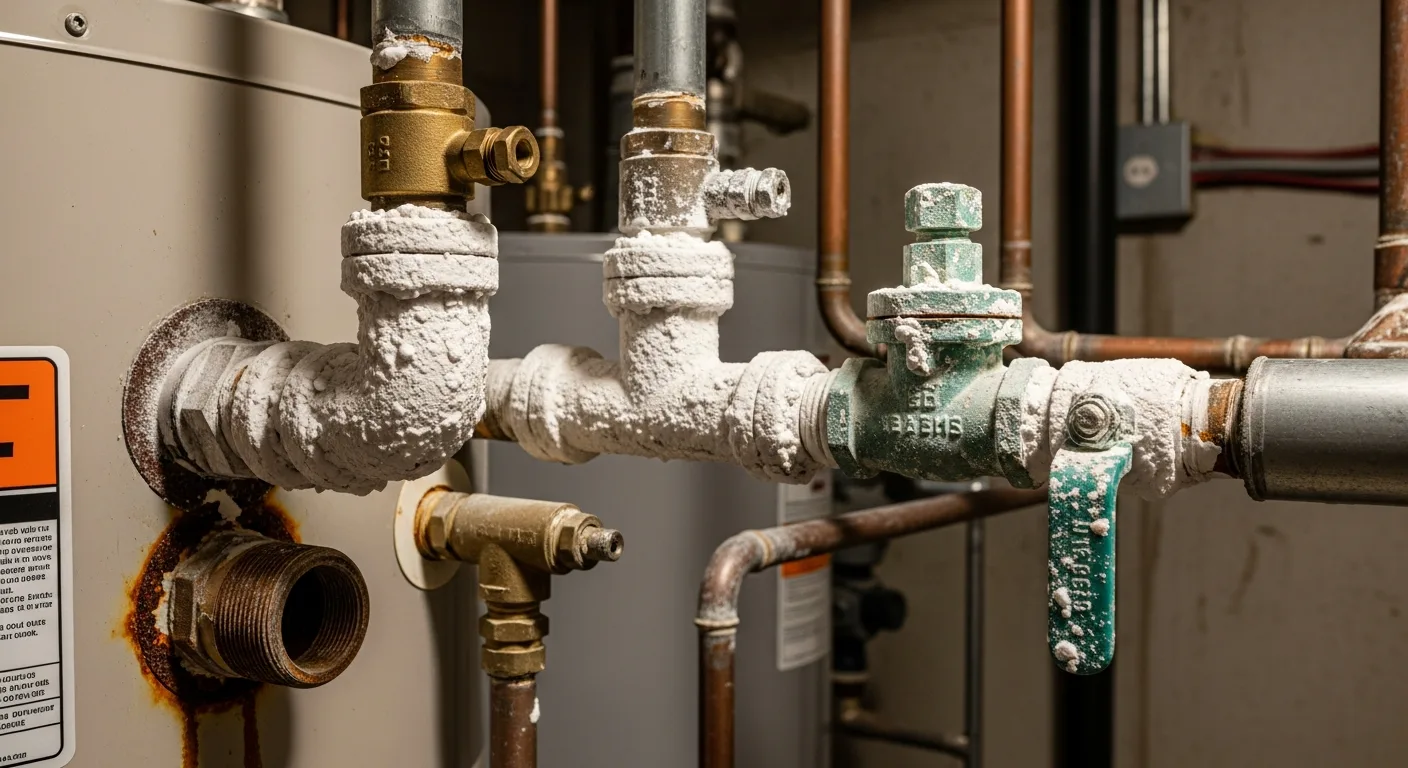
This matters because hard water behaves differently inside a home. When water is heated, calcium and magnesium minerals can come out of solution and form scale. You may notice this as white crust around faucets, cloudy buildup on showerheads or residue in kettles. The same process can also happen inside equipment you cannot easily see, including tanks, heat exchangers, valves and humidifier panels.
Is Selkirk's Water Safe?
Yes. Hard water is generally a nuisance and equipment-maintenance issue, not automatically a health concern. The City of Selkirk describes its water as clean, sustainable and safe, and says it is required to submit annual water reports to the Province that detail the treatment process, operator certification and major disruptions.
The concern for homeowners is not usually drinking safety. It is long-term mechanical wear. Mineral-heavy water can make certain appliances work harder, lose efficiency faster or require more frequent maintenance. This is especially true for homes that also use water filtration services to manage iron or hardness in a private well system — where the full mineral load falls on your equipment without any municipal treatment upstream.
How Hard Water Affects Water Heaters
Water heaters are often the first place homeowners notice the effects of hard water. As water is heated, minerals can settle at the bottom of the tank. Over time, this sediment layer can reduce heating efficiency, create popping or rumbling noises and shorten the lifespan of the unit.
In a gas water heater, sediment can force the burner to heat through a layer of mineral buildup before warming the water. In an electric water heater, minerals can build up around the elements. In both cases, the system may take longer to heat water and may use more energy than it should.
Common signs of water heater scale or sediment include:
- Rumbling, popping or crackling sounds from the tank
- Hot water running out faster than usual
- Longer recovery time after showers or laundry
- Cloudy or gritty water from hot taps
- Higher energy bills without a clear reason
A regular flush can help reduce sediment, but if a tank has gone years without maintenance, flushing may not fully remove hardened scale. See our post on When to Replace Your Hot Water Tank: Age, Signs & Options for a full breakdown of when repair becomes replacement.
How Hard Water Affects Boilers and Hydronic Heating
Homes with boiler installation and service, in-floor radiant heating or hydronic heating loops should pay close attention to water quality. These systems rely on controlled water movement and heat transfer. Mineral buildup inside a boiler or heat exchanger can reduce efficiency and create overheating issues.
Even a thin layer of scale can act like insulation. That means the boiler has to work harder to move heat into the water. In some cases, scale can contribute to noisy operation, pressure issues, reduced flow or premature part failure.
For boiler systems, maintenance should include checking pressure, expansion tanks, pumps, valves and water condition. If the system has been topped up repeatedly with fresh hard water, mineral content can accumulate over time.
How Hard Water Affects Humidifiers
Many forced-air heating systems in Manitoba homes use whole-home humidifiers during the winter. These systems are especially vulnerable to mineral buildup because they intentionally run water across a pad, panel or evaporative surface.
In hard-water conditions, humidifier pads can crust over quickly. Once the pad is coated, airflow and moisture transfer drop. The humidifier may still be running, but it may not be adding much humidity to the home.
Signs your humidifier may be affected by mineral buildup include:
- Dry air even when the humidifier is turned on
- White crust inside the humidifier cabinet
- Water leaking around the furnace area
- A clogged drain line
- Frequent pad replacement
Most whole-home humidifier pads should be inspected every heating season. In harder water areas, replacement may be needed more often.
How Hard Water Can Affect Plumbing Fixtures and Appliances
Hard water can also affect plumbing fixtures, dishwashers, washing machines, fridge water lines and coffee makers. The issue is usually gradual. A valve may become stiff, a screen may clog, a fixture may lose pressure or an appliance may require more cleaning.
For HVAC-related systems, the biggest concern is any equipment that uses water as part of heating, cooling, humidification or heat transfer. This includes water heaters, boilers, humidifiers, combi-boilers and some specialty mechanical systems. Our broader guide on hard water in rural Manitoba homes covers the full scope of damage hard water causes across plumbing and appliances.
What Homeowners in Selkirk Should Do
The best approach is preventive maintenance. Selkirk homeowners should consider:
Flushing the water heater regularly. This helps remove loose sediment before it hardens inside the tank.
Inspecting humidifier pads every heating season. A clogged humidifier pad can reduce comfort and create water-management issues around the furnace.
Checking boilers and hydronic systems annually. Boilers should be inspected for pressure, leaks, pump performance, expansion tank condition and signs of scale-related efficiency loss.
Testing water hardness if problems keep returning. A simple hardness test can help determine whether scale is contributing to repeated equipment issues. Our guide on how to test well water quality in Manitoba walks through what to test for and where to send samples.
Considering water treatment where appropriate. A water softener or treatment system may help reduce scale in some homes, especially where water-connected equipment is repeatedly affected. See our post on Do I Need a Water Softener for Well Water in Manitoba? for guidance on when treatment makes sense.
Selkirk's Water Infrastructure Is Strong, But Homes Still Need Maintenance
Selkirk has invested heavily in its water infrastructure, including treatment, wells, storage and distribution. The city has also highlighted the reliability of its well-based system and the consistency of groundwater compared with river water. The Health Canada drinking water guidelines confirm that hard water at typical Canadian levels is safe for consumption.
Water quality should be part of the maintenance plan for water heaters and hydronic equipment. Follow the equipment manufacturer’s water-quality requirements. NRCan’s guide to operating your house covers heating equipment operation and maintenance.
If you have well water in the Selkirk area, the stakes are higher still. Our post on water softeners and iron filters in Selkirk, MB covers the specific mineral treatment sequence that protects well-connected equipment in this region. For a full overview of what we handle locally, browse our Selkirk HVAC services page.
For more on how hard water forms and what it does to home systems, see our guide to hard water in rural Manitoba. To understand your specific mineral levels before selecting treatment, see our post on how to test well water quality in Manitoba. Our post on signs you need a new water heater covers how mineral scale accelerates tank failure.
Need Help With a Water Heater, Boiler or Humidifier in Selkirk?
If you live in Selkirk or the surrounding area and you are noticing hot water issues, boiler noise, dry winter air, scale buildup or repeated humidifier problems, book an inspection with our team. A proper checkup can determine whether the issue is normal wear, equipment age, mineral buildup or a maintenance problem that can be corrected before it becomes more expensive.
Book an InspectionFrequently Asked Questions
How hard is Selkirk's municipal water supply?
Selkirk's municipal water is sourced from carbonate-aquifer groundwater, which is typically high in hardness, dissolved solids, and dissolved chlorides. While the City of Selkirk treats this water before distribution, the source water itself carries significant mineral content. Homeowners connected to municipal water experience less hardness than those on private wells in the surrounding area, but scale buildup in water heaters, humidifiers, and boilers is still a common maintenance issue for Selkirk homes.
Can hard water actually damage a water heater?
Yes. As water is heated, calcium and magnesium minerals come out of solution and settle at the bottom of the tank as sediment. Over time, this layer hardens into scale that insulates the burner or heating element from the water, forcing the system to work harder and use more energy. Sediment buildup also causes the characteristic rumbling and popping sounds in aging tanks. A water heater that should last 10–12 years may fail in 7–8 years in hard-water conditions without regular maintenance. Annual flushing is the most effective preventive step.
Does hard water affect boilers and in-floor heating systems?
It can, particularly in systems that are periodically topped up with fresh municipal or well water. Each addition of untreated water introduces new minerals that accumulate inside the heat exchanger and boiler over time. Even a thin layer of scale reduces heat transfer efficiency and can contribute to overheating, pressure issues, and premature component failure. Closed-loop hydronic systems are less vulnerable than open systems, but water quality should still be checked during annual boiler inspections.
How often should I flush my water heater in Selkirk?
In hard-water conditions like those common in Selkirk, annual flushing is recommended. This removes loose sediment before it has the chance to harden into scale. For tanks that have not been flushed in several years, a professional inspection is worthwhile — heavily scaled tanks may not respond well to flushing and may be candidates for replacement. If your tank is older than 10 years and showing signs of sediment buildup, a new higher-efficiency unit will save energy and prevent an emergency failure.
Should Selkirk homeowners get a water softener?
It depends on your water source and the severity of mineral buildup you are experiencing. Homeowners on private wells in the Selkirk area almost always benefit from water softening, given well hardness levels that commonly reach 20–35 grains per gallon. Homeowners on municipal Selkirk water may find that regular appliance maintenance is sufficient, though a softener still extends equipment life and reduces cleaning effort. A water test is the right starting point — it tells you exactly what you are dealing with before you invest in treatment equipment.