
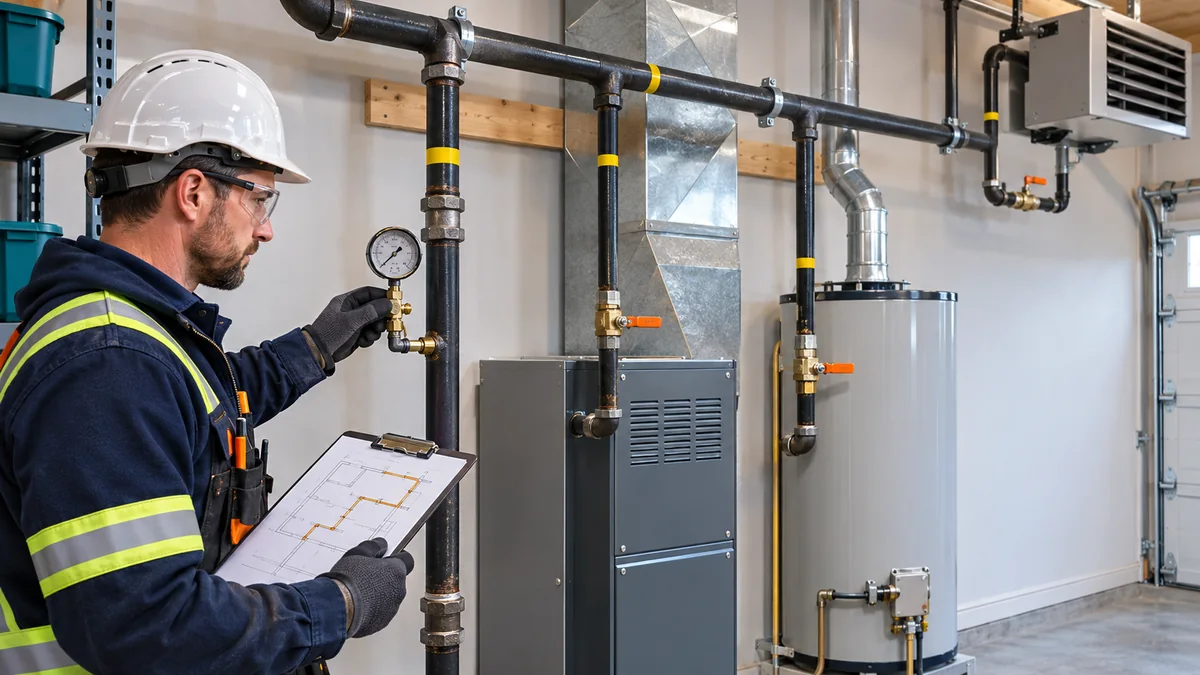
A gas line is not selected by pipe diameter alone. The fitter must account for fuel type, appliance input, developed pipe length, pressure, simultaneous demand, material, routing, shutoffs and future loads.
In short
Manitoba Hydro states that natural-gas equipment and appliances must be installed by a licensed gas fitter, with permits obtained before work and inspection after installation. Do not treat appliance hookup as a do-it-yourself plumbing project.
Projects that commonly require new or modified gas piping
- Kitchen ranges and cooktops
- Fireplaces and inserts
- Garage and shop unit heaters
- Outdoor BBQ connections
- Furnaces, boilers and water heaters
- Commercial kitchen and rooftop equipment
Why gas-line sizing matters
Undersized piping can cause pressure drop when several appliances run together. The farthest or largest appliance may fail to operate correctly even though it works when other equipment is off. A proper calculation uses the full connected load and route—not a guess based on the nearest existing pipe.
What a complete installation includes
- Confirm appliance ratings and available supply.
- Calculate the load and developed length.
- Select approved materials and a protected route.
- Provide accessible shutoffs, sediment control and appliance connections as required.
- Pressure-test the work.
- Complete permit and inspection requirements.
- Commission the appliance and verify safe operation.
Planning details homeowners should provide
Share the appliance model, exact location, finished-wall plans, other gas equipment and possible future additions. Garage finishes, concrete work and outdoor routes can affect both cost and timing.
Patterson Mechanical provides licensed residential gas fitting for appliances, fireplaces, garage heaters and other Manitoba projects. Existing systems with suspected leakage or condition concerns may also require a gas-line safety inspection.
If you smell natural gas
Do not operate switches, use a phone inside, light a flame or attempt a repair. Leave the building, move to a safe location and contact Manitoba Hydro's emergency line or 911 as appropriate.
Rural properties considering propane equipment should also read our guide to propane heating in Manitoba winters.
How to compare gas-line installation quotes
A useful quote should identify the appliance or future load being served, the proposed route, pipe material, shutoff locations, permit and inspection responsibilities, and any wall, ceiling or exterior restoration excluded from the work. It should also state whether appliance connection and start-up are included. Comparing those scope items is more reliable than comparing one total without context.
Tell the contractor about every connected gas appliance and any planned additions. Pipe sizing is based on the system, not just the new appliance. A route that is shortest on paper may be impractical once finished rooms, structural members, clearances and service access are considered. Final routing should be confirmed on site by the licensed fitter.
After the work is complete
Keep the permit and inspection documentation with the appliance manuals. Know where the appliance shutoff is, but do not alter the piping or test for leaks with a flame. If an appliance later changes, have the existing system capacity reviewed again.
Indoor, exterior and buried gas-line routes
| Route | Planning issues | What the licensed fitter confirms |
|---|---|---|
| Indoor | Finished walls, structural members, appliance access and shutoff location | Approved material, support, protection and clearances |
| Exterior above grade | Weather exposure, physical damage, appearance and appliance connection | Approved exterior material, corrosion protection and support |
| Buried | Utility locates, excavation, landscaping, tracing media and restoration | Approved piping, protection, burial requirements and inspection access |
There is no responsible one-number answer for burial depth without the approved design and site conditions. Manitoba requirements depend on the installation method, piping system and applicable code. Underground work also requires utility-location procedures before excavation. The licensed fitter and inspecting authority should confirm the required depth and protection before the trench is closed.
Manitoba permit, test and inspection sequence
- Confirm the appliance load and route with a licensed gas fitter.
- Obtain the required permit before alterations, additions or installation begins.
- Install and protect the piping, valves and appliance connections to the approved scope.
- Complete the required gas-piping pressure test and documentation.
- Arrange inspection through the authority responsible for that installation.
- Keep the permit, inspection and appliance documents with the property records.
Manitoba states that drawings are required with permit applications when the total connected input exceeds 400,000 BTU per hour. Concealed or underground piping can also require additional documentation. Do not cover new piping until the fitter confirms it is ready for inspection.
Load information to provide before quoting
List every existing and proposed appliance with its nameplate input, not just the new range, fireplace, garage heater or barbecue. Also identify the meter location, desired appliance location, renovation schedule and whether future equipment is planned. This lets the fitter evaluate the complete connected load and available pressure instead of sizing one branch in isolation.
Need help with this system?
Patterson Mechanical serves Stonewall, Winnipeg and Manitoba's Interlake region. We will confirm service availability and an appointment window for your property.
Request ServiceFrequently Asked Questions
Can a homeowner install a gas line in Manitoba?
Gas work requires the appropriate licensed fitter, permit and inspection process. Do not treat gas piping as a homeowner renovation task.
How deep must a buried gas line be?
The required depth depends on the approved piping system, installation method, code and site. The licensed fitter and inspecting authority must confirm it before excavation and backfill.
Can a gas line run outside the house?
An exterior route may be possible when approved materials, support, corrosion protection, clearances and physical protection are used. The fitter must design the route.
Does adding a gas range require a larger gas line?
Possibly. The fitter must calculate the total connected appliance load, pipe length, pressure and existing capacity—not just the range connection.
Do outdoor barbecue gas lines need a shutoff?
The installation needs approved appliance isolation and connection details. The licensed fitter will locate and specify the required shutoff for the design.