
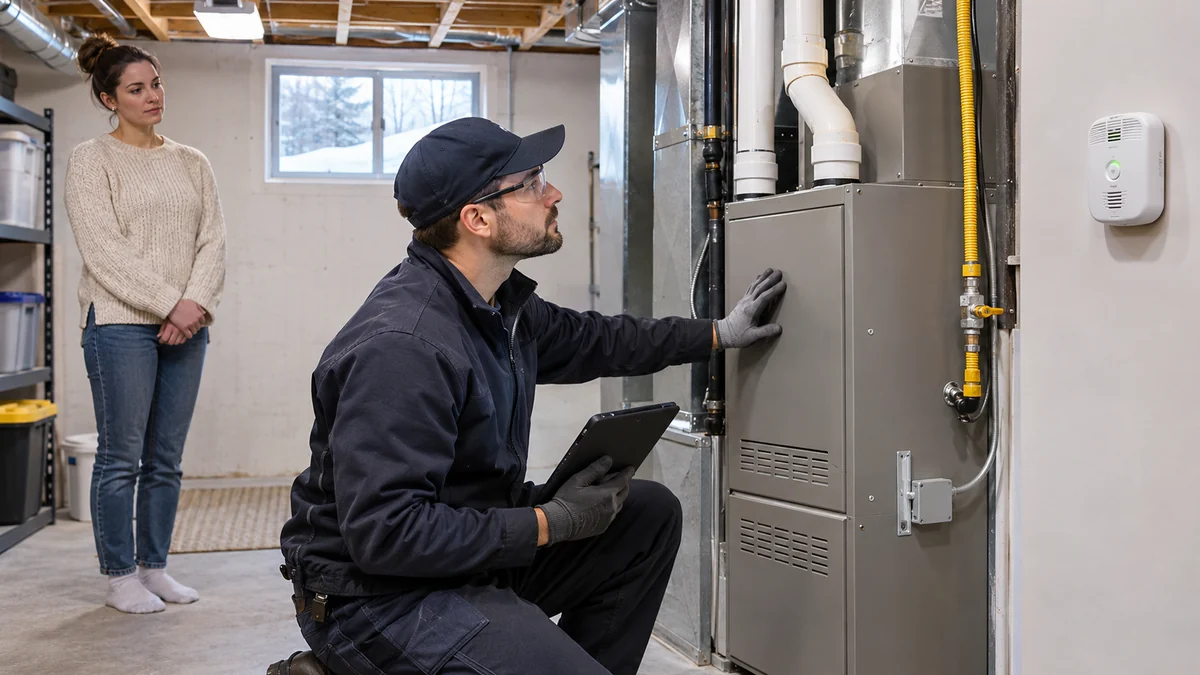
Natural gas and carbon monoxide are different hazards. Natural gas is given a distinctive rotten-egg or sulphur-like odour so leaks can be noticed. Carbon monoxide is invisible, odourless and tasteless; only a working alarm and proper equipment assessment can warn of it reliably.
Emergency actions
CO alarm: evacuate people and pets, call 911 or local emergency services from a safe place, and stay out. Persistent natural-gas odour: leave without operating switches, phones or appliances inside and call Manitoba Hydro's emergency line from a safe location. Do not re-enter to shut off the furnace.
Do not use smell to judge carbon monoxide
Carbon monoxide forms when fuel burns and can build up when appliances malfunction, vents are blocked or equipment is not installed or maintained correctly. Health Canada notes that exposure risk is greater during colder months because Canadian homes use fuel-burning heating equipment more often.
Symptoms can resemble illness and include headache, nausea, dizziness, weakness, confusion and shortness of breath. If symptoms improve outside or several occupants feel ill together, move to fresh air and seek emergency help. Do not wait for an article or service appointment.
Warning signs around fuel-burning equipment
| Sign | What it may mean | Action |
|---|---|---|
| CO alarm sounds | Carbon monoxide detected | Evacuate and call 911 |
| Rotten-egg or sulphur-like odour | Possible natural-gas leak | Leave and call Manitoba Hydro from outside |
| Soot near furnace or vent | Combustion or venting problem | Turn off only if safe and arrange urgent assessment |
| Yellow, unstable flame where normally visible | Possible burner or combustion concern | Do not adjust; arrange qualified service |
| Pilot repeatedly goes out on older equipment | Draft, thermocouple or combustion-air concern | Stop repeated relighting and call |
| Condensation, stale air or backdraft clues | Possible venting or pressure issue | Arrange combustion/venting assessment |
Gas odour: leave before making a phone call
Do not turn lights on or off, use a phone inside, start a vehicle in an attached garage or attempt to find the leak. Leave doors as you find them, move everyone to a safe location and call Manitoba Hydro's 24-hour emergency number. If there is fire or immediate danger, call 911.
A brief dusty smell at the first seasonal startup is not the same as a persistent gas odour, but uncertainty should favour safety. Do not relight or restart gas equipment to test the smell.
CO alarms are essential but not a maintenance substitute
Install certified CO alarms according to product instructions and Manitoba requirements, including locations where they can protect sleeping areas. Test them, replace batteries where applicable and replace the alarm at the end of its listed service life. An alarm does not make blocked vents, damaged equipment or poor combustion safe.
Manitoba Hydro recommends annual inspection and maintenance of space- and water-heating equipment by a licensed heating contractor. Exterior vents must remain clear of snow, ice, leaves and debris.
What qualified furnace safety service includes
- Venting and combustion-air path inspection
- Burner, ignition and flame-proving operation
- Gas piping and pressure checks within qualified scope
- Combustion testing and equipment-specific adjustments
- Heat-exchanger assessment using applicable procedures
- Safety-control and full-cycle verification
- Documentation of any condition requiring shutdown, repair or replacement
Patterson Mechanical provides gas-fitting support for heating equipment and furnace service across Manitoba. These services follow emergency response; they do not replace 911 or Manitoba Hydro during an active gas or CO event.
Reduce winter combustion risk
Keep furnace and water-heater areas free of storage, maintain working CO alarms, inspect exterior vents after snow and freezing rain, avoid running vehicles in attached garages, and never use barbecues, camp stoves, generators or unvented outdoor heaters inside. Arrange service before cold weather and after any venting, renovation or appliance change that could affect combustion air.
Need a furnace safety assessment after the emergency is cleared?
We can inspect the furnace, venting, combustion, controls and gas-fitting scope—but active gas odour or a CO alarm always goes to emergency response first.
Request Furnace ServiceFrequently Asked Questions
Can you smell carbon monoxide from a furnace?
No. Carbon monoxide is odourless, colourless and tasteless. Use working certified alarms and qualified equipment inspection.
What should I do if I smell natural gas near the furnace?
Leave immediately without operating switches or phones inside. From a safe place, call Manitoba Hydro's emergency line; call 911 for fire or immediate danger.
What should I do when a CO alarm sounds?
Evacuate people and pets, call 911 or local emergency services from a safe place, and do not re-enter until authorities say it is safe.
Does soot around a furnace mean a cracked heat exchanger?
Soot can indicate a combustion or venting problem but does not identify one component by itself. Stop operation if safe and arrange urgent qualified assessment.
Will annual furnace maintenance prevent carbon monoxide?
Maintenance reduces avoidable risk and can identify unsafe conditions, but working CO alarms and correct emergency action remain necessary.